
In this article
BPC-157 tendon research does not establish that a retail pen repairs a human tendon or tells you when to return to sport. The useful distinction for a buyer in Bali is between a tendon-cell experiment, a report about knee pain and a study that actually tests recovery from a diagnosed tendon injury. Those are three different questions.
What was studied in tendon research?
A laboratory paper on tendon fibroblasts examined growth-hormone-receptor expression after exposure to BPC-157. This is a biological observation in an experimental model. It is not a measurement of whether a surfer can paddle again, a runner can tolerate hills or a torn tendon can withstand sporting load.
That does not make the research meaningless. It identifies a mechanism researchers can investigate. The mistake is skipping the intervening questions about formulation, exposure, clinical outcomes and safety, then describing a proposed mechanism as a proven recovery result for the product in a basket.
Why a knee-pain report cannot answer an Achilles question
The often-cited BPC-157 knee paper is a small retrospective report about intra-articular treatment and reported knee symptoms. It is not a randomized trial of a subcutaneous pen for Achilles tendinopathy or tendon rupture.
| Evidence you encounter | What it can address | What it cannot establish by itself |
|---|---|---|
| Tendon-cell experiment | A biological response in that model | Human healing time |
| Retrospective knee report | Observations after a particular procedure | A causal effect on a different injury |
| A customer's progress photo | Appearance at two moments | Tendon strength or readiness for sport |
| Product label | Declared ingredients and total content | Clinical effectiveness |
Our knee-pain article covers that report separately. Keeping its question narrow makes it more useful, not less: a knee symptom and a tendon diagnosis should not be silently treated as the same thing.
The BPC-157/TB-500 pen is a distinct product
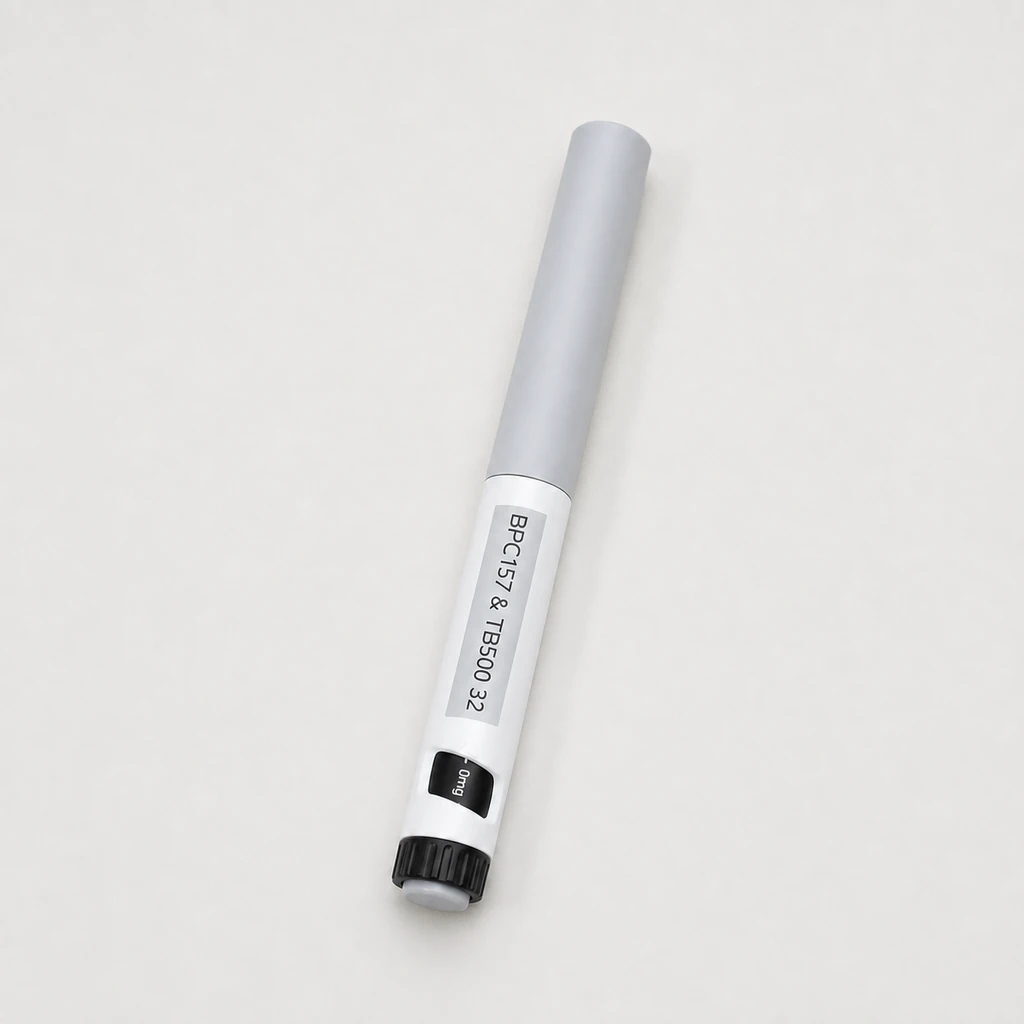
The listed blend contains 16 mg BPC-157 plus 16 mg TB-500 in one pen. It is not a BPC-157-only product. A paper about BPC-157 alone therefore cannot establish the effect of this exact combination and presentation.
The distinction also applies to names in publications. A reference to thymosin beta-4 is not sufficient identification of every commercial product called TB-500. For this comparison, use the actual label and documents instead of assuming that similar names settle the identity question.
FDA's peptide-compounding information records important safety and characterization uncertainties for BPC-157. It is a useful evidence boundary, not a statement about the registration status of this product in Indonesia.
A more useful decision for an active Bali stay
Start with the activity you need to recover, not the label “recovery peptide”. Walking comfortably to work, returning to resistance training and completing a surf session are different goals. Write down the diagnosed injury, the activity that remains difficult and what your treating professional is using to judge progress.
Bring that description to the clinical conversation. A seller can explain the declared contents of a pen; that does not establish whether the injury has been correctly identified or whether increased loading is appropriate. If an assessment is missing, a product comparison does not fill that gap.
For someone staying only a short time in Bali, the return flight is an administrative date rather than evidence of tissue recovery. Arrange continuity of assessment if the problem extends beyond the trip. Do not use a reduction in discomfort, an online testimonial or a pen running out as the sole reason to resume the activity that caused trouble.
Questions readers ask
Does more collagen in an experiment mean a stronger human tendon?
Not automatically. A molecular or cellular measurement and the functional performance of a living tendon are different outcomes. The study must actually measure the conclusion being claimed.
Does adding TB-500 prove faster recovery?
The ingredient list establishes that the blend differs from BPC-157 alone. It does not establish superiority. That would require evidence for the relevant combination, formulation, injury and outcome.
What can I usefully ask before selecting a pen?
Ask which exact ingredients and documents belong to the item, and whether the research being cited matches them. Take questions about diagnosis, treatment and return to activity to the professional managing the injury.
Sources
- Pentadecapeptide BPC 157 enhances the growth hormone receptor expression in tendon fibroblasts
- Intra-Articular Injection of BPC 157 for Multiple Types of Knee Pain
- Certain Bulk Drug Substances for Use in Compounding that May Present Significant Safety Risks
Source and editorial checks completed. How these articles are prepared.