In this article
GHK-Cu and Matrixyl are different peptide ingredients, and a comparison becomes misleading if it also mixes a cosmetic cream with an injectable pen. For a buyer in Bali, the useful question is not simply which name sounds better for collagen. Identify the ingredient, the finished formulation and the kind of skin outcome that was actually studied.
Start with the exact ingredient name
GHK-Cu is a copper complex of the GHK tripeptide. Matrixyl is a branded cosmetic ingredient name; the original Matrixyl information from Croda identifies palmitoyl pentapeptide-4. It is not another spelling of GHK-Cu and it is not a copper peptide merely because both appear in anti-ageing skincare discussions.
Matrixyl-branded variants should also be identified individually. A claim about one ingredient or finished cream should not automatically be transferred to every product carrying a related name. The full ingredient list is more informative than the front-label family name.
| Comparison point | GHK-Cu | Original Matrixyl ingredient |
|---|---|---|
| Identity | Copper-bound tripeptide | Palmitoyl pentapeptide-4 |
| Common comparison context | Copper-peptide skin research | Cosmetic peptide formulations |
| Important missing detail in many comparisons | Route and finished formulation | Exact branded variant and final cream |
| What the name alone cannot establish | Clinical result from a particular pen | Result from every product using the ingredient |
What the research can and cannot connect
The GHK-Cu fibroblast study examined collagen synthesis in cell culture. That is useful mechanistic research. It does not by itself tell you how a particular pen changes visible facial skin.
A randomized split-face study of topical palmitoyl pentapeptide examined a specific formulation in photoaged facial skin. This is a different kind of evidence: a finished topical product and a visible skin endpoint, rather than a cell experiment. It still does not establish that all Matrixyl products perform identically.
These are not two arms of one GHK-Cu-versus-Matrixyl trial. Treating the publications as a direct winner-and-loser comparison would erase their different methods and products.
Why the delivery format changes the question
A cream combines an ingredient with a base formulation and is used on the skin. A pen is a different product with different route-specific requirements. Neither a cream percentage nor a pen's total milligrams gives a common scale for predicting cosmetic results.
For example, “50 mg in a pen” and “a percentage in a serum” describe different quantities. Without the same formulation, route and clinical endpoint, they cannot be ranked as a stronger and weaker version of the same treatment. More labelled ingredient is not a substitute for relevant evidence.
Decide which comparison you actually need
If you are choosing a cosmetic product, compare full ingredient lists, the finished-product evidence and how that product fits the rest of your routine. If you are asking about a GHK-Cu pen, the questions concern that exact preparation and its clinical suitability. Moving between those decisions without saying so creates confusion.
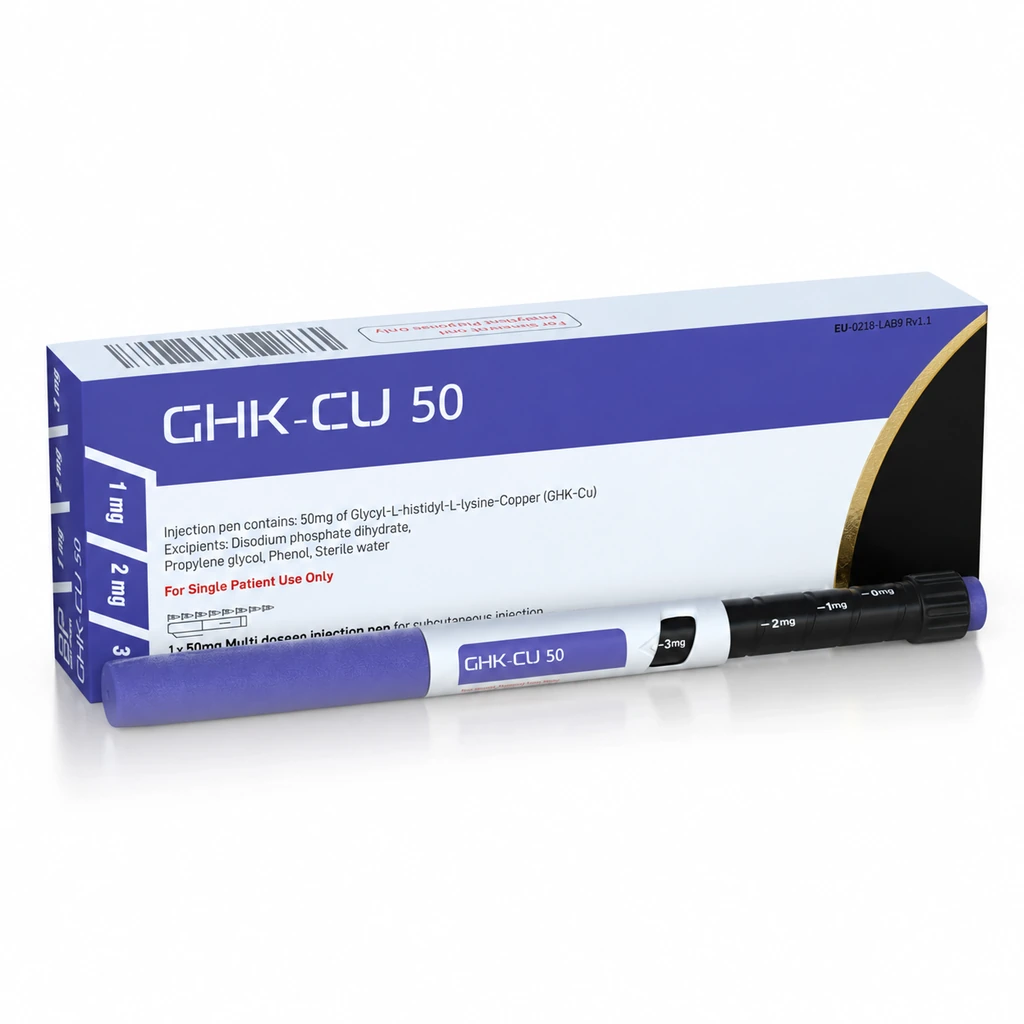
The GHK-Cu catalogue page lists a 50 mg pen; it is not a Matrixyl cosmetic serum. Our pen-versus-serum guide explains that format distinction. The copper-peptide and retinol article addresses another separate issue: comparing ingredients within a topical routine.
A practical Bali buying question
Ask the seller or practitioner: “Is the evidence you are showing me about this exact finished product, and was it used by the same route?” Then ask what was measured: appearance of fine lines, a laboratory marker, ingredient penetration or an individual's photograph.
That approach remains useful when you encounter several skin treatments during a Bali stay. Keep a record of the product and the treatment dates so that any later assessment can identify what actually changed. Starting several different interventions together makes it harder to attribute a skin change to one ingredient.
FAQ
Is Matrixyl a type of GHK-Cu?
No. Original Matrixyl uses a different peptide ingredient. Always check the exact variant and ingredient list.
Does a collagen cell study prove wrinkle improvement?
It supports a biological research question, not the complete clinical claim for a particular finished product.
Can a serum study justify using the contents of a pen on skin?
No. Evidence for one formulation and route does not establish another use. Follow the exact product information and obtain appropriate professional advice rather than repurposing a pen as a cosmetic ingredient.
Sources
- Stimulation of collagen synthesis in fibroblast cultures by the tripeptide-copper complex glycyl-L-histidyl-L-lysine-Cu2+
- Matrixyl ingredient information
- Topical palmitoyl pentapeptide provides improvement in photoaged human facial skin
Source and editorial checks completed. How these articles are prepared.