In this article
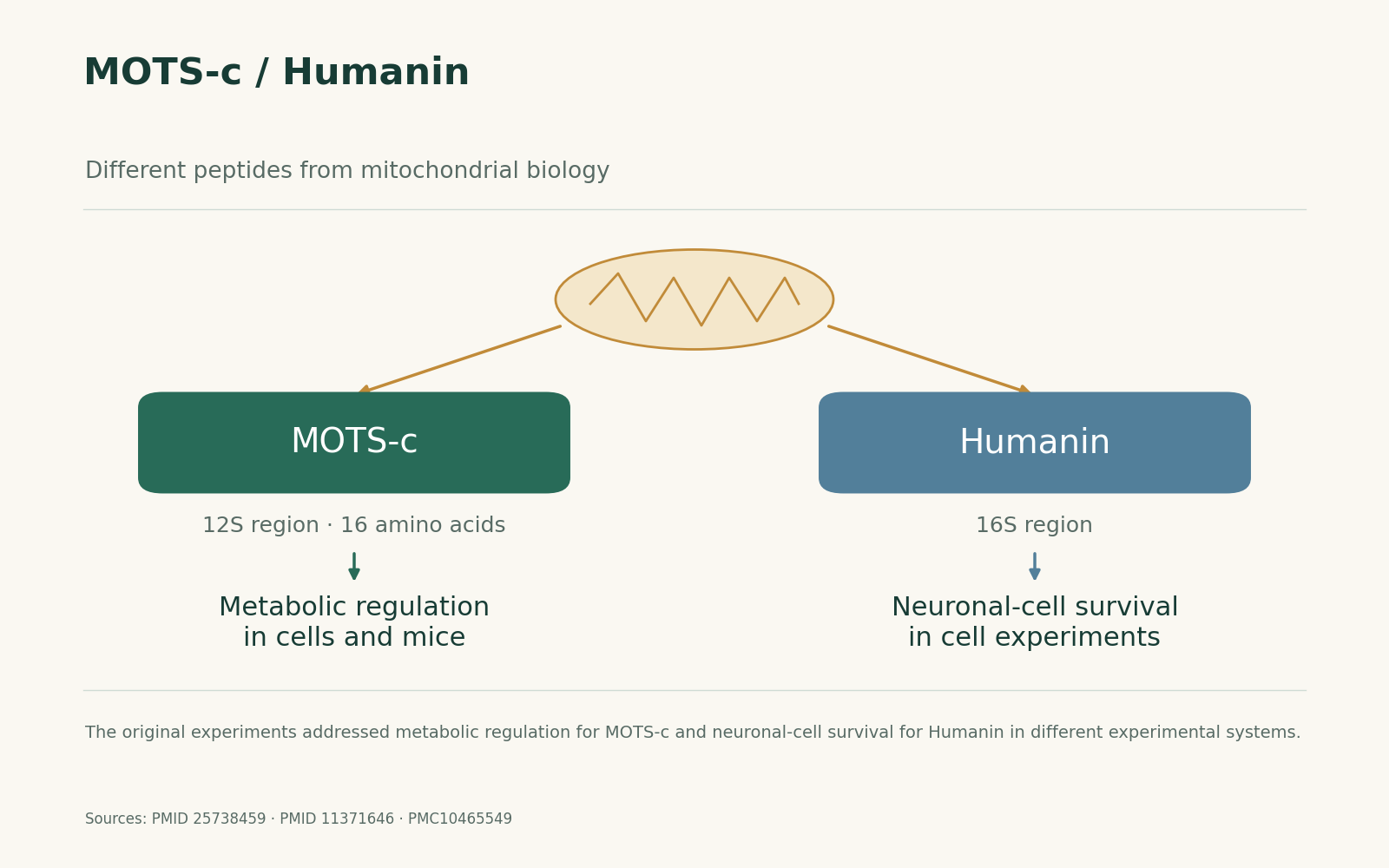
MOTS-c and Humanin belong to the mitochondrial-derived peptide family, but they are different sequences with different experimental histories. MOTS-c is closely associated with metabolic regulation; Humanin was initially identified through experiments on neuronal-cell survival. Calling both “mitochondrial peptides” identifies a family, not an interchangeable product. MOTS-c discovery; Humanin discovery. For readers comparing MOTS-C in Bali, Indonesia, separate evidence about a molecule from the identity and instructions of the finished product.
The molecular distinction
MOTS-c is a 16-amino-acid peptide associated with a short coding sequence in the mitochondrial 12S ribosomal RNA region. Humanin's coding sequence lies within the 16S region. These names consequently point to different molecular starting points within mitochondrial biology. Humanin sequence study.
The comparison is not between two sizes of the same peptide. A material described as Humanin should be evaluated under that identity; a modified analogue needs its own name and evidence. The same principle separates native MOTS-c from the distinct analogue CB4211.
Metabolic adaptation versus cell survival
The original MOTS-c work examined how the peptide related to metabolic regulation in cells and mice, including insulin sensitivity. That is why glucose handling and energy metabolism appear in MOTS-c descriptions.
The original Humanin experiments tested neuronal cells exposed to particular Alzheimer-related insults. The observed protection depended on the peptide's structure. That is a cell-survival question: did cells withstand a defined experimental challenge? It is different from asking whether an adult's memory or lifespan improves.
These are useful biological distinctions, but they are not a direct test establishing one peptide as better than the other.
What would count as a result for the buyer's goal?
For a metabolic goal, the relevant human outcomes might include a defined insulin-sensitivity measurement. A recruiting MOTS-c trial, NCT07505745, is pursuing that kind of question; no results were posted at the October 2026 check. Trial registry.
For a cognitive claim about Humanin, a cell-survival experiment cannot substitute for measured cognition in people. A claim about longevity would require another outcome again.
The useful purchasing distinction is therefore specific: identify the exact peptide, then identify the outcome attached to it. “Mitochondrial support” alone leaves both unresolved. A MOTS-c pen and a Humanin discussion may share a scientific family while addressing substantially different questions.
Connect the evidence to a product question in Bali
Read the study’s formulation, route, participants and measured outcome before applying a headline to a product choice. A mechanism explains a research question; it does not establish a result for every finished pen. Keep the exact catalogue presentation beside the evidence, and identify any missing product-specific information before deciding what to ask next.
Product formats to compare in Bali
Compare the following catalogue entries with the product or route discussed above. The stated amount is the total labelled pack content, not a dose or a promise of how long it will last.
| Catalogue product | Labelled contents | What to distinguish |
|---|---|---|
| MOTS-C | 32 mg / pen | A specific peptide; exercise studies are not a personal response prediction. |
Confirm your Bali order
For Canggu, Berawa, Pererenan, Umalas, Seminyak or Uluwatu, send the exact product, quantity and destination. Ask the team to confirm the delivery arrangements for that address before relying on a proposed time.
View all pen formats · Ask about the exact product on WhatsApp
Sources
- The mitochondrial-derived peptide MOTS-c promotes metabolic homeostasis and reduces obesity and insulin resistance
- A rescue factor abolishing neuronal cell death by a wide spectrum of familial Alzheimer's disease genes and Abeta
- Evidence of natural selection in the mitochondrial-derived peptides humanin and SHLP6
- MOTS-c for Improving Insulin Sensitivity in Adults With Prediabetes and Overweight/Obesity
Source and editorial checks completed. How these articles are prepared.