In this article
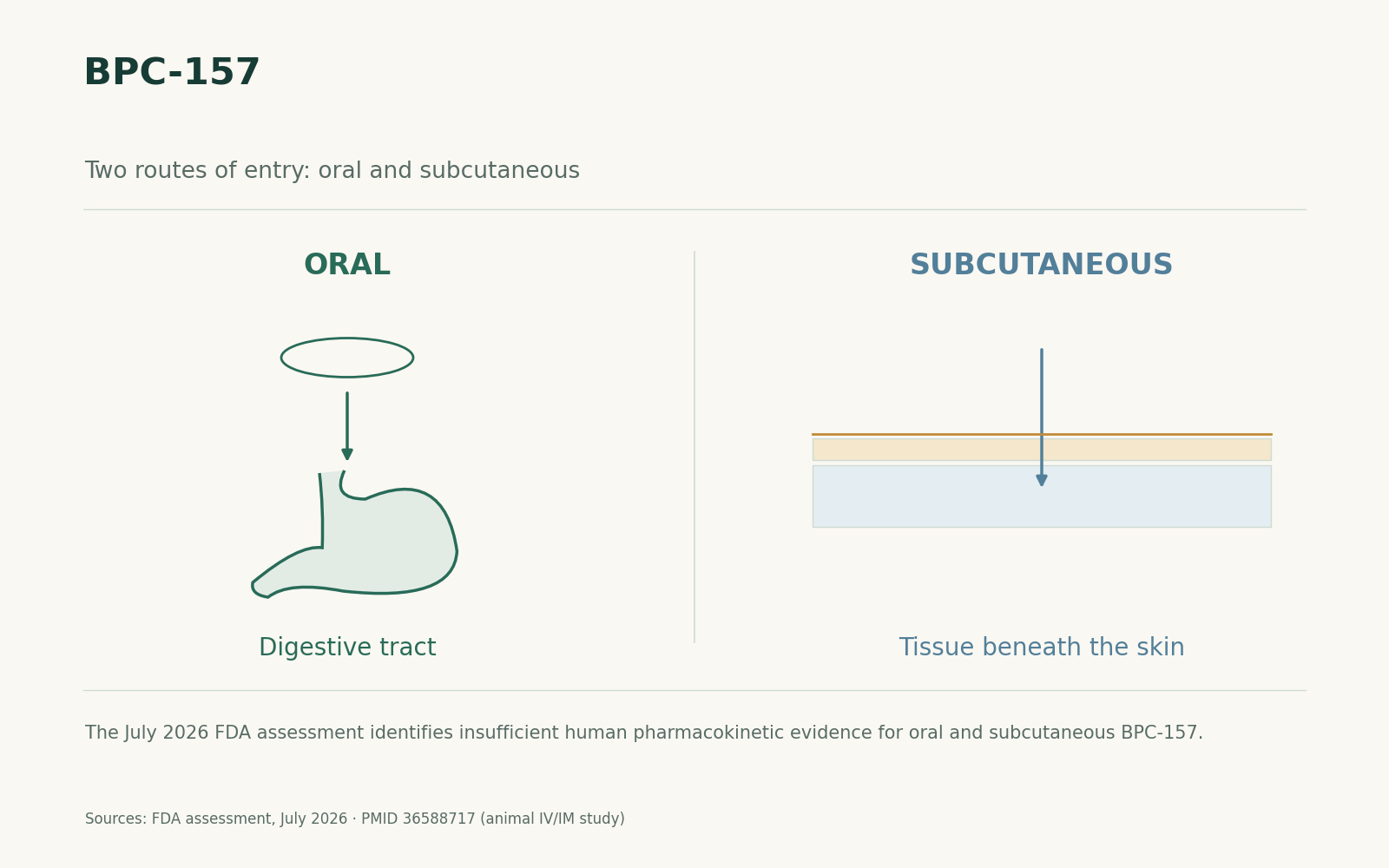
Oral BPC-157 and injectable BPC-157 differ first in how the finished product enters the body: an oral product is swallowed, while an injectable product is prepared for a specified injection route. That practical distinction is clear. A reliable human comparison showing which route provides better BPC-157 absorption or outcomes is not established by the sources reviewed here.
What changes with the format
An oral capsule includes the stated ingredient and its capsule formulation. An injectable offer requires a formulation suitable for its specified route and container. Those are different product requirements, even when both labels say BPC-157.
The FDA's July 2026 assessment distinguishes the quality attributes relevant to oral capsules and injectable preparations. It also identifies an important evidence gap: human pharmacokinetic profiles for the oral and subcutaneous routes remain unknown in that assessment. Pharmacokinetics concerns how a substance reaches, moves through and leaves the body.
This means that “swallowed” and “injected” describe delivery, while a claim about the amount reaching circulation needs actual route-specific measurements.
What the animal paper can explain
An original pharmacokinetic study followed BPC-157 after intravenous and intramuscular administration in rats and dogs. It examined distribution, metabolism and elimination.
That is useful background on the molecule, but its animals and routes differ from a person comparing an oral capsule with a subcutaneous pen. It cannot supply a human oral-to-injectable conversion or establish that one retail format works better. Intramuscular and subcutaneous are also different injection routes.
The familiar marketing split—oral for digestive goals, injectable for tendons—therefore needs its own human outcome evidence. The route name alone does not demonstrate that division of benefits.
Make sure the ingredient comparison is equal
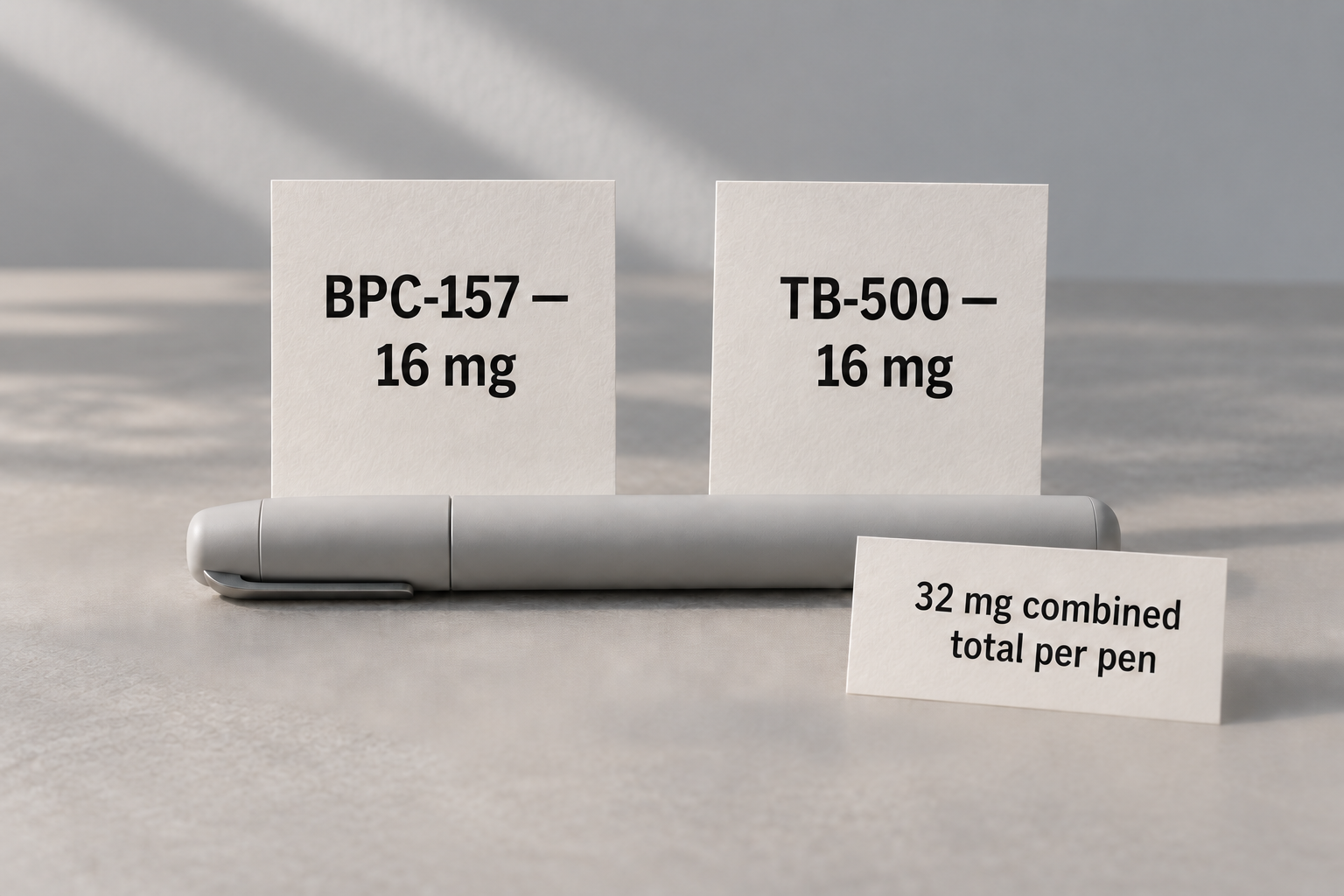
Bodypharm's relevant offer is a BPC-157 + TB-500 pen containing a declared 16 mg of each component. Comparing it with a capsule that lists BPC-157 alone changes two things at once: delivery format and ingredient composition.
Write down both differences before comparing price or a claimed result. A useful product comparison identifies the exact ingredient or pair, the intended route and the complete formulation. For a medical goal such as persistent digestive symptoms or an injury, the central evidence question remains whether that particular preparation improved the relevant outcome in people. Choosing a format does not answer that treatment question by itself.
Sources
- July 23–24, 2026 Pharmacy Compounding Advisory Committee Meeting — FDA Presentations
- Pharmacokinetics, distribution, metabolism, and excretion of body-protective compound 157, a potential drug for treating various wounds, in rats and dogs
Source and editorial checks completed. How these articles are prepared.