
In this article
Repair & Glow pairs a BPC-157/TB-500 pen with a separate GHK-Cu pen. The idea behind the Bali catalogue pairing is to bring tissue-repair research and copper-peptide skin research into one comparison. It is not one three-ingredient pen, and the bundle itself does not establish a proven combined treatment.
What is inside Repair & Glow?
| Item | Declared content | Question it brings to the comparison |
|---|---|---|
| BPC-157/TB-500 pen | 16 mg BPC-157 plus 16 mg TB-500 | Tissue and recovery research |
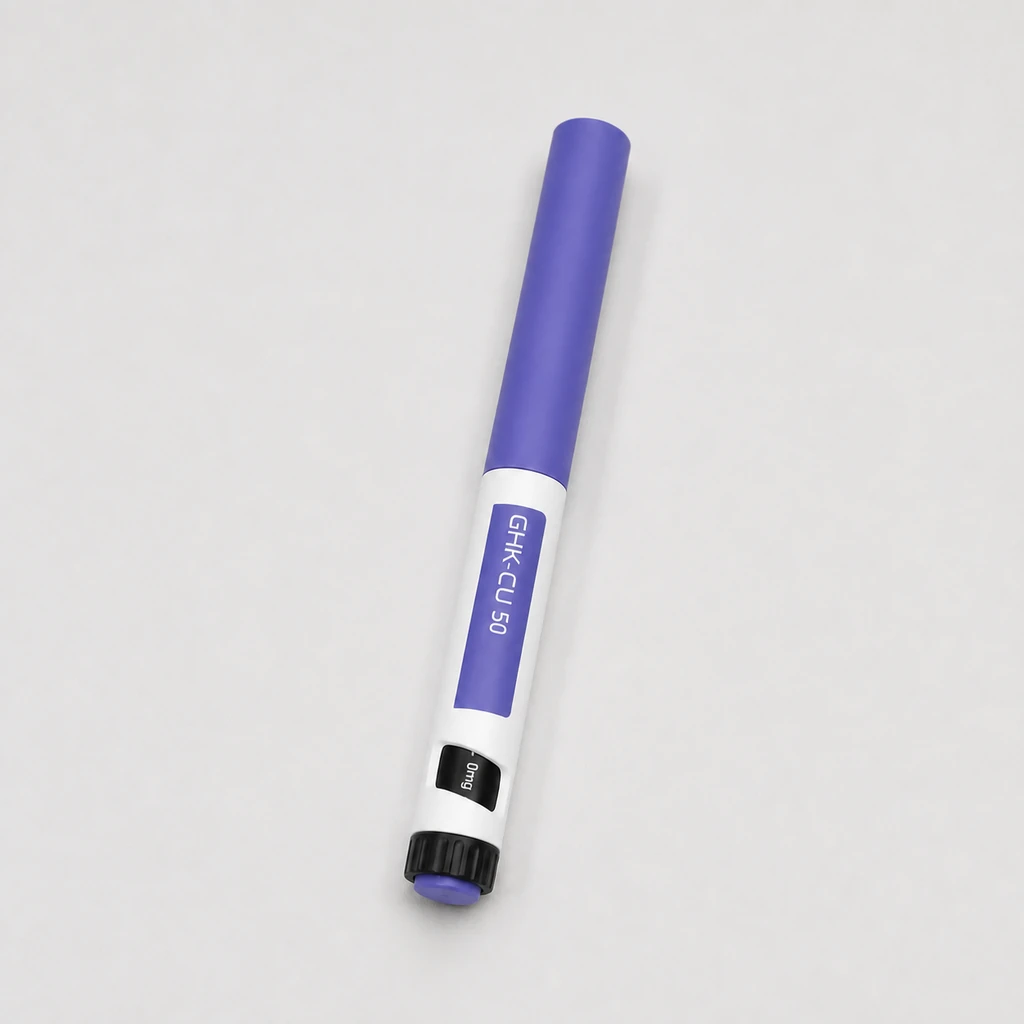
| GHK-Cu pen | 50 mg GHK-Cu | Copper-peptide and skin-matrix research |
The bundle page is the place to verify the actual items. A total for one pen is not a total for each ingredient, and the contents of two pens should not be added together as though they were a single formulation. The practical advantage of a clear item list is knowing exactly which product a question concerns.
Why these research areas are discussed together
Connective-tissue and skin questions can overlap in everyday language. People may use “repair” to describe recovering from an injury, improving skin appearance or understanding collagen. Those are different outcomes. A catalogue pairing should make the distinction easier to see, not suggest that a single slogan answers all of them.
For example, a BPC-157 tendon-fibroblast experiment investigated a particular cellular response. A GHK-Cu fibroblast study examined collagen synthesis in cell cultures. Neither is a trial demonstrating that this two-pen bundle delivers a combined result in people.
The useful connection is therefore a subject area, not a promise of synergy. It lets a reader separate two research questions and then ask which evidence, if any, matches the outcome they actually care about.
Two pens, one blend and “GLOW” are not synonyms
Online descriptions sometimes use “GLOW” for a mixture containing BPC-157, TB-500 and GHK-Cu. A shared list of molecule names does not make that product identical to Repair & Glow. Number of containers, declared ratios, formulation and accompanying instructions can differ.
Our guide to kits and premixed blends explains the general distinction. For this set, the BPC/TB ingredients are already together in one pen; GHK-Cu is in another. This article is not an instruction to transfer ingredients, combine solutions or make a new blend.
The distinction remains important even when you are only comparing catalogues. A quotation for a three-ingredient vial does not necessarily describe the same item as two finished pens. Ask for the actual composition rather than treating a nickname as a specification.
Decide which question is yours
Someone in Bali exploring skin appearance may want to understand the GHK-Cu component first. Someone investigating a tendon or recovery claim may need to examine the BPC/TB evidence separately. Neither situation automatically establishes a reason to select both products.
Use the GHK-Cu page and the BPC/TB page to identify each format. Then write one sentence for each: “The outcome I am asking about is…” If the second sentence repeats the first without supporting evidence, the pairing has not yet answered a genuine additional need.
FDA's information identifies uncertainties for BPC-157 and injectable GHK-Cu. Separate pens make the contents easier to identify; they do not remove those uncertainties or prove that using both is appropriate.
Questions readers ask
Is Repair & Glow one injection containing three ingredients?
No. The listed set contains two separate pens. One has BPC-157 and TB-500; the other has GHK-Cu. Product grouping does not create a new combined formula.
Does the bundle show that the ingredients work better together?
No. A merchandising rationale and a clinical interaction study are different things. The sources discussed here do not establish superior outcomes from this exact combination.
Must I choose the bundle if I am interested in only one research area?
No. The individual pages allow a focused comparison of each product. Clarify the actual question and exact item rather than assuming that a larger collection of ingredients answers it better.
Sources
- Pentadecapeptide BPC 157 enhances the growth hormone receptor expression in tendon fibroblasts
- Stimulation of collagen synthesis in fibroblast cultures by the tripeptide-copper complex glycyl-L-histidyl-L-lysine-Cu2+
- Certain Bulk Drug Substances for Use in Compounding that May Present Significant Safety Risks
Source and editorial checks completed. How these articles are prepared.