In this article
Retatrutide is one molecule acting at three receptor types; CagriSema combines two different medicines, cagrilintide and semaglutide. For someone comparing options in Bali, that distinction matters more than a league table of weight-loss percentages. They are different development programmes, and a retail pen bearing an ingredient name is not automatically the product used in a clinical trial.
One molecule versus a two-component treatment
Retatrutide targets GIP, GLP-1 and glucagon receptors. CagriSema combines the amylin analogue cagrilintide with the GLP-1 receptor agonist semaglutide. Adding the receptor names together does not reveal which treatment is appropriate for an individual.
| Comparison | Retatrutide | CagriSema |
|---|---|---|
| Basic composition | One investigational molecule | Cagrilintide plus semaglutide |
| Main signalling targets | GIP, GLP-1, glucagon | Amylin pathway and GLP-1 |
| Relevant published example | Retatrutide obesity trial | REDEFINE 1 combination trial |
| What the name does not establish | Identity of a particular retail pen | Equivalence of separately sourced ingredients |
Lilly's current explanation describes retatrutide as investigational. CagriSema should likewise be evaluated using the exact programme and product information, rather than assuming that two separately purchased ingredients reproduce its studied formulation.
Why the largest percentage is not a buying rule
The retatrutide phase 2 publication and REDEFINE 1 publication report different studies. Participants, treatment periods, dose-escalation arrangements and statistical analyses are not interchangeable. A headline from one study cannot be subtracted from another to calculate a reliable personal advantage.
Ask whether a comparison is direct: were participants randomly assigned between the two treatments within the same trial? If not, it is a cross-trial comparison. That can explain the research landscape, but it cannot establish that one treatment will produce a particular extra result for you.
Also distinguish the result for everyone assigned to treatment from an analysis focused on people following treatment as intended. Both may answer useful questions. Mixing the most favourable number from one analysis with a different analysis elsewhere produces a misleading scoreboard.
Current development status matters
Retatrutide research has progressed beyond the early study often quoted on shop pages. Lilly's September 2026 information still describes an investigational medicine. A recent trial announcement is useful news; it does not mean that a pen offered by an unrelated seller has received approval or was manufactured for that trial.
The same identification discipline applies to CagriSema. Confirm the compound, formulation, manufacturer and applicable regulatory information. Neither a social-media nickname nor an article about an international study answers those questions for a local product.
A useful comparison for a Bali consultation
Bring a short record of the practical decision: the outcome you want assessed, previous treatment, current medicines and how long you will remain in Bali. Ask the clinician which evidence fits your situation and who would provide follow-up after travel. The answer should address suitability and continuity, not just which name currently attracts more attention.
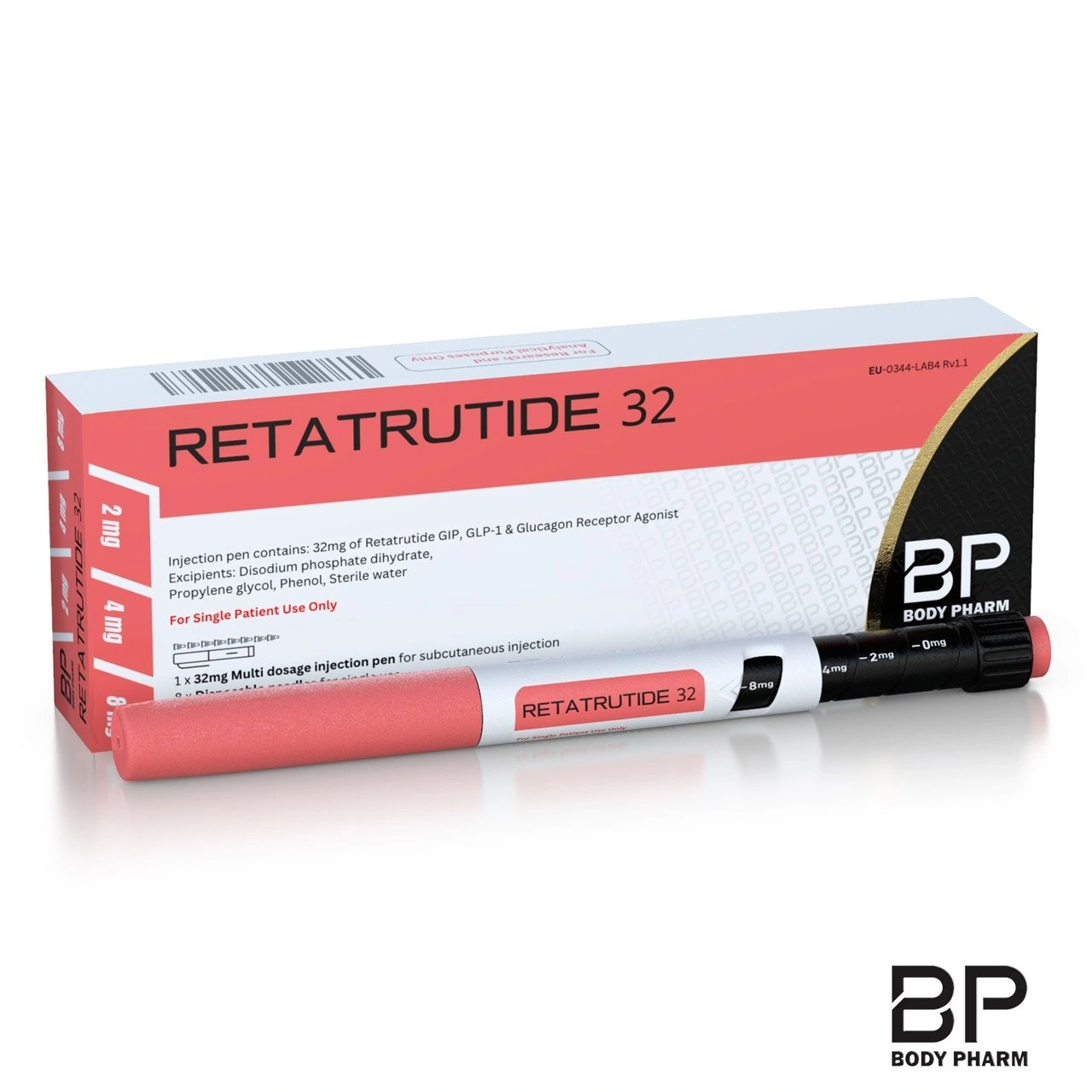
For product identification, the Retatrutide catalogue page lists a 32 mg pen. That figure describes labelled total content; it does not make the pen equivalent to a trial device or establish a personal dose. CagriSema is discussed here as a comparator and is not an item in this catalogue.
If you actually meant semaglutide on its own, use the separate retatrutide–semaglutide comparison. Adding cagrilintide changes the question; the two comparisons should not be merged.
Questions worth asking before comparing offers
Request the exact ingredient names rather than “triple” or “next generation.” Check whether a claimed result comes from the finished product or only from research into a molecule. Ask what documents identify the offered formulation and what follow-up is available. A clear answer to these questions is more useful than an unsupported prediction of how much weight you will lose.
FAQ
Is CagriSema another name for retatrutide?
No. CagriSema combines cagrilintide and semaglutide. Retatrutide is a separate molecule with three receptor targets.
Does “three receptors” automatically beat two components?
No. Receptor count is a mechanism description, not a clinical ranking. Study design, outcomes and individual suitability still matter.
Can I recreate CagriSema by combining separately purchased products?
The published combination study does not establish that an independently assembled regimen is equivalent. Product compatibility and treatment decisions require qualified clinical assessment.
Sources
- What to know about retatrutide
- Triple–Hormone-Receptor Agonist Retatrutide for Obesity — A Phase 2 Trial
- Coadministered Cagrilintide and Semaglutide in Adults with Overweight or Obesity
Source and editorial checks completed. How these articles are prepared.