In this article
Visceral-fat area and visceral-fat volume are different quantities. Bali readers comparing body-composition reports around tesamorelin research should keep the units beside every number. An area in square centimetres cannot be treated as a volume in millilitres merely because both reports use the phrase “visceral fat.”
Units describe what was estimated
An area describes a two-dimensional region; a volume describes a three-dimensional quantity. Some reports also include proprietary scores or other derived outputs. Those labels need their own definitions. Removing the units to make a comparison chart simpler can remove the information needed to interpret it.
The 2026 MRI–DXA comparison used matched L3 regions in 50 scan pairs from 28 adults. Its findings about correlation and systematic differences concern those defined estimates. They do not provide a general area-to-volume conversion or validate every device's score.
Read the report as a measurement record
| Output | Essential detail | Shortcut to avoid |
|---|---|---|
| Area | Unit and anatomical slice or region | Relabelling it as volume |
| Volume | Unit and region boundaries | Comparing an unmatched body region |
| Device score | Device definition and analysis | Treating it as a universal tissue amount |
Even matching units are insufficient if the anatomical regions differ. The method and analysis should remain visible too. A clinician may find two reports useful for different reasons without treating their numbers as directly interchangeable.
Where tesamorelin trial measurements fit
The EGRIFTA WR label describes pivotal research using CT visceral-fat assessment at L4–L5 after 26 weeks in a specific HIV-associated lipodystrophy setting. A different region, method or score on a general body-composition report is not automatically the same endpoint.
For a Bali consultation, bring the complete reports rather than only the numerical summary. The tesamorelin catalogue page identifies the listed format, and the catalogue provides product navigation. Neither proves equivalence to the labelled research preparation or indicates a need for imaging.
Unit questions
Can square centimetres be compared with millilitres?
They describe different dimensions and cannot be treated as the same measurement.
Are equal units enough?
No. Anatomical region, method and analysis still need to match the question.
Does a device score equal the trial endpoint?
Not without evidence that its definition and method correspond to that specific research measurement.
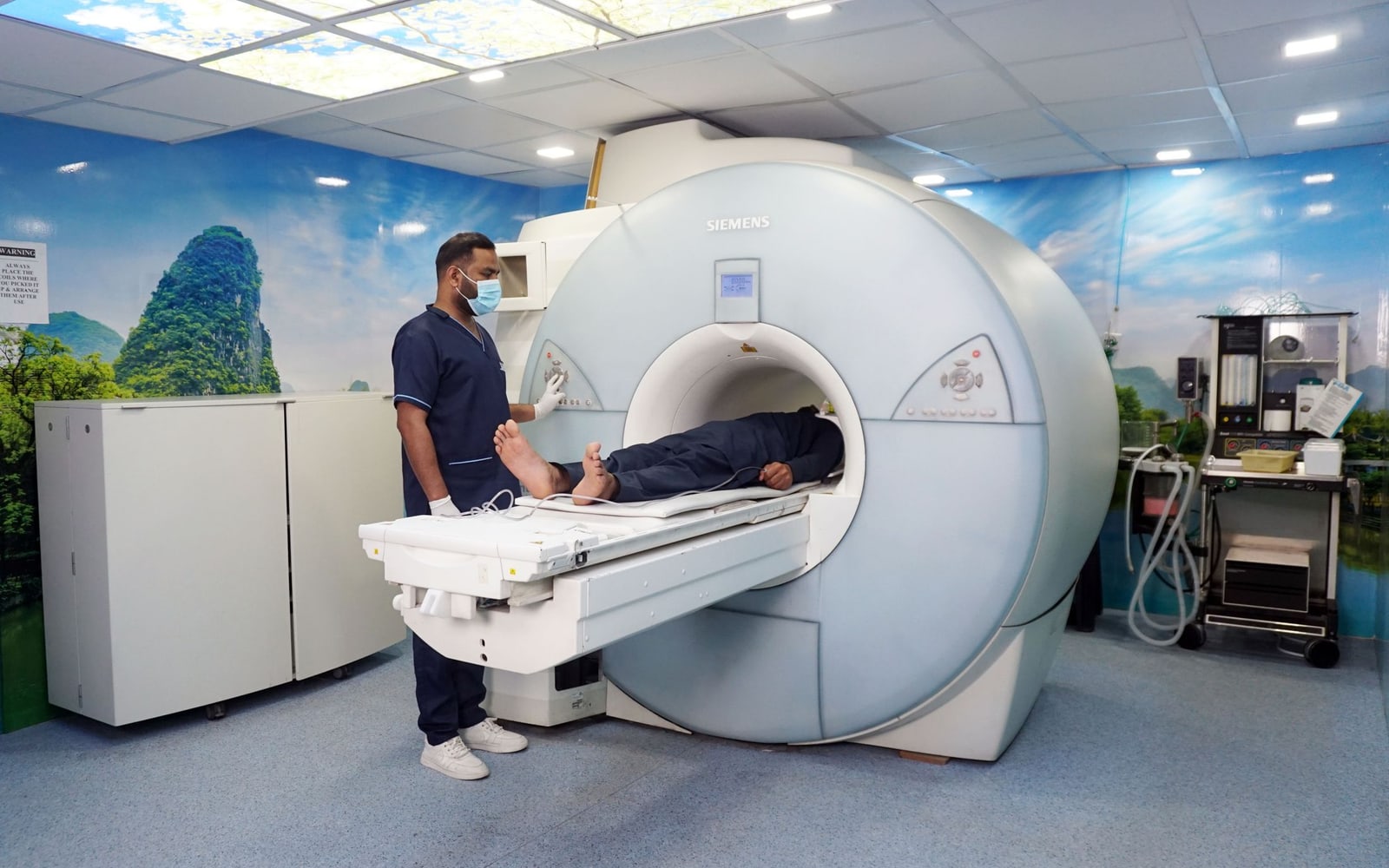
Photograph: Alnoor Diagnostic Centre · Pexels. Medical imaging equipment, illustrating the distinction between measurement methods. Illustrative stock photograph; it does not show the study preparation or its results.
Sources
- Comparison of MRI and DXA for visceral adipose tissue quantification in obese adults without diabetes
- EGRIFTA WR prescribing information
Source and editorial checks completed. How these articles are prepared.