
In this article
CJC-1295 and ipamorelin are discussed in relation to growth-hormone signalling, but a hormone result is not the same as evidence that their combination treats insomnia or improves sleep. If you are comparing a CJC/ipamorelin pen in Bali because you want better nights, ask which study actually measured sleep and which formulation it tested.
CJC-1295 and ipamorelin: three different evidence questions
| Question | Relevant measurement | What does not answer it |
|---|---|---|
| Does a compound affect hormone signalling? | Defined hormonal measurements in a study | A customer's report of vivid dreams |
| Does someone sleep better? | Appropriate sleep and daytime-function outcomes | A rise in GH or IGF-1 alone |
| Does this pen produce that result? | Evidence matching the actual combination and formulation | Research on a different individual ingredient |
This separation makes the comparison practical. You can be interested in a mechanism without treating it as a sleep-treatment claim. You can also acknowledge that someone felt better without knowing which change caused it.
What the frequently cited human studies examined
A CJC-1295 study in healthy adults investigated a long-acting GHRH analogue and GH/IGF-1 responses. It was not a trial establishing that a retail CJC/ipamorelin blend improves insomnia. The exact form matters, particularly where “CJC-1295” is used loosely in product descriptions.
Human research on ipamorelin after bowel surgery investigated postoperative bowel function. Its existence does not turn ipamorelin into a proven sleep treatment. A clinical study is only evidence for the question and conditions it actually investigated.
The DAC versus no-DAC explanation helps with names. The pairing article explains why the two molecules appear together. Neither naming nor a proposed pairing establishes a sleep outcome.
Read the actual product separately from the story
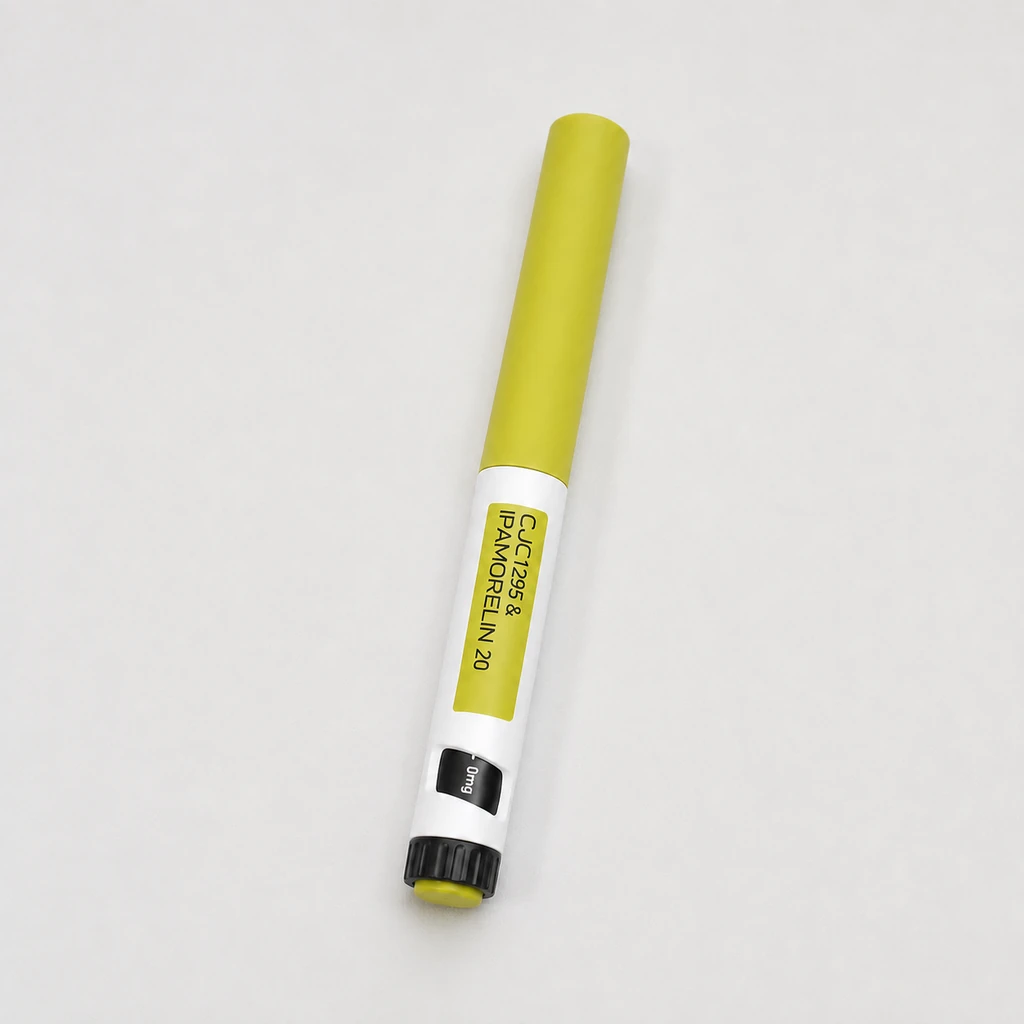
Our CJC/ipamorelin listing describes 10 mg of each ingredient in one 20 mg pen. The amount is total labelled content, not a recommended administration or a number of nights of sleep improvement. There is no useful conversion from “milligrams in the pen” to “hours of deep sleep”.
If a claim cites a study, match the compound form, whether the ingredients were combined and the outcome measured. If these do not match, describe the paper as background research rather than a demonstration of the specific product's effect.
Make the Bali sleep question specific
“Better sleep” might mean falling asleep more easily, fewer awakenings, feeling less tired the next day or adapting to a changed schedule. Write down which problem you want assessed. A broad wellness label can make these different concerns appear interchangeable when they require different questions.
For a visitor whose schedule changed after arriving in Bali, note the dates and timing of the problem. For a resident, record whether it is a new change or a persistent pattern. These details make an assessment more useful than choosing a product because its category mentions recovery.
The NHLBI sleep guidance suggests a sleep diary before an appointment. A simple record can include bedtime, waking time, awakenings, naps and daytime sleepiness, alongside caffeine, alcohol and exercise timing. It describes the experience you want to improve; it does not diagnose the cause or prove a peptide effect.
A short note to bring to the conversation
Record the main complaint, when it began, what changed around that time and how it affects the day. Keep any product enquiry separate: the exact listing, ingredient names and available documents. This lets the clinical discussion address sleep while the catalogue discussion answers a concrete product question.
Questions readers ask
Do vivid dreams show that the pen is working?
A subjective change does not establish the cause or demonstrate a clinically useful outcome. It also does not show that another reader would experience the same thing.
Is a GH or IGF-1 result a sleep-quality score?
No. It is a different measurement. The question “did sleep improve?” needs an appropriate sleep outcome rather than a substitute laboratory number.
Should I use a bedtime schedule from a sales article?
A product comparison is not a personalized treatment schedule. Persistent sleep problems deserve assessment of the actual complaint rather than an assumed hormonal explanation.
Sources
- Prolonged stimulation of growth hormone and insulin-like growth factor I secretion by CJC-1295 in healthy adults
- Prospective, randomized, controlled, proof-of-concept study of ipamorelin for postoperative ileus
- Insomnia — Diagnosis
Source and editorial checks completed. How these articles are prepared.