In this article
A new or changing mole should not be dismissed as an expected tanning effect, including when Melanotan II is part of the history. In Bali, the useful next step is a clinical skin assessment, not a stronger tanning routine or an online verdict from a photograph. Record what changed and when, and tell the clinician about all relevant products and sun exposure.
Why the timing alone does not explain the change
If a mole darkens after a product is started, the timing is worth reporting. It does not prove that the change is harmless, that the product caused it, or that a serious diagnosis is present. Each of those is a different conclusion.
The TGA's Melanotan warning discusses risks of products sold for tanning. This is relevant safety information, not an Indonesian registration statement about a particular seller. More importantly, it is not a tool for diagnosing an individual skin lesion.
Avoid both shortcuts: “it is only the peptide” and “every change means cancer.” A clinician needs the lesion's history and examination. A product forum cannot supply those missing pieces.
Changes that deserve attention
The American Academy of Dermatology's ABCDE guidance describes a practical way to notice suspicious features. It is a prompt for assessment, not a score that allows you to clear a mole at home.
| Feature | What to notice |
|---|---|
| Asymmetry | One part looks unlike the other |
| Border | Irregular or poorly defined outline |
| Colour | Uneven colour or several colours within a lesion |
| Diameter | Size is relevant, but small lesions can still matter |
| Evolving | A change in size, shape, colour or symptoms |
A spot that is new, different from your others, changing, itching or bleeding should be discussed with a dermatologist. A lesion does not have to meet every item before an assessment is worthwhile.
What to record before the appointment
Write down when you first noticed the change, what it looked like previously if known, and whether it has symptoms. Include any available earlier photographs. List the products used, their dates and any relevant medicines; identify the exact product rather than only saying “a tanning peptide.”
If you take a photograph, use it as a record to bring to the appointment. Consistent lighting and a size reference can help document a change, but a phone image cannot replace examination. Do not delay the assessment while trying to obtain a perfect before-and-after comparison.
A Bali-specific follow-up problem
Visitors may notice a change near the end of a stay and assume they should wait until home. Tell the clinician your departure date so that assessment and follow-up can be planned sensibly. If an examination has already happened elsewhere, bring the report instead of relying on memory.
Residents can keep a clear record of the assessment and any follow-up instructions. Whichever applies, do not use photographs from different beaches, lighting conditions or tanning stages as evidence that a lesion has resolved. The practical objective is continuity of assessment, not cosmetic comparison.
Where product information helps
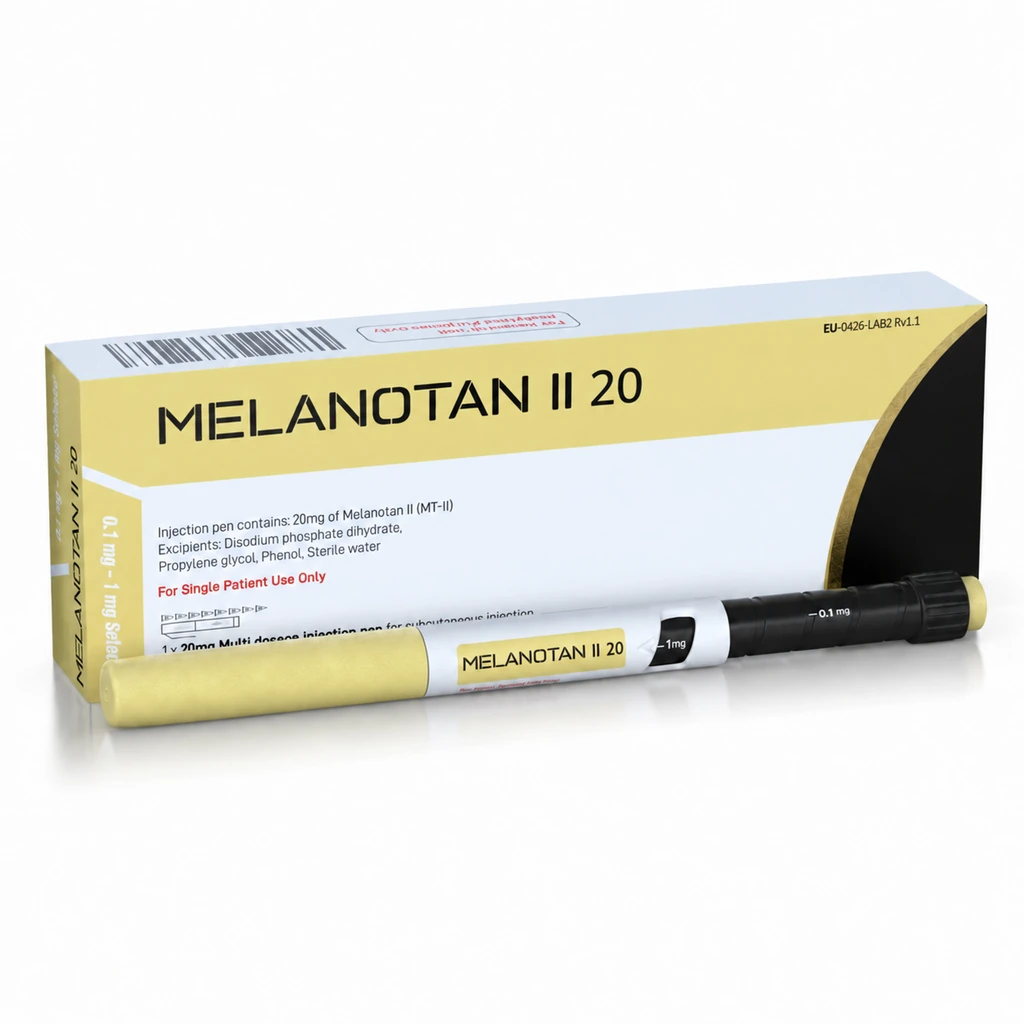
The Melanotan II catalogue page helps identify the listed product and labelled format. This can be useful information for a medical history, but it does not assess a mole or establish a treatment response.
Our Melanotan II versus afamelanotide article explains why different pigmentation-related substances and medical products should not be treated as one category. An authorization or study involving a different product does not settle the safety question for the product you used.
What a responsible answer should avoid
No seller can reliably clear a changing mole by saying that darker pigmentation is part of the intended effect. Nor should a comparison article promise that a different amount, another product or a waiting period will solve it. The useful action is to preserve the history and get the change assessed.
FAQ
Does a changing mole always mean melanoma?
No. Changes can have different explanations. The point is to obtain a proper assessment rather than assign a diagnosis yourself.
Can a small mole be ignored because it is under 6 mm?
No. The AAD explains that concerning lesions can be smaller. Evolution and other features still matter.
Should I send a picture to the shop instead of a dermatologist?
A shop can help identify a supplied product. It cannot replace clinical evaluation of the lesion.
Does an even tan prove every darker spot is harmless?
No. Overall skin colour and the assessment of an individual changing lesion are different questions.
Sources
Source and editorial checks completed. How these articles are prepared.