Pressure ulcers in thymosin research: why prolonged pressure changes the wound question
A pressure ulcer has a different clinical setting from a venous leg ulcer or an uncomplicated abrasion.
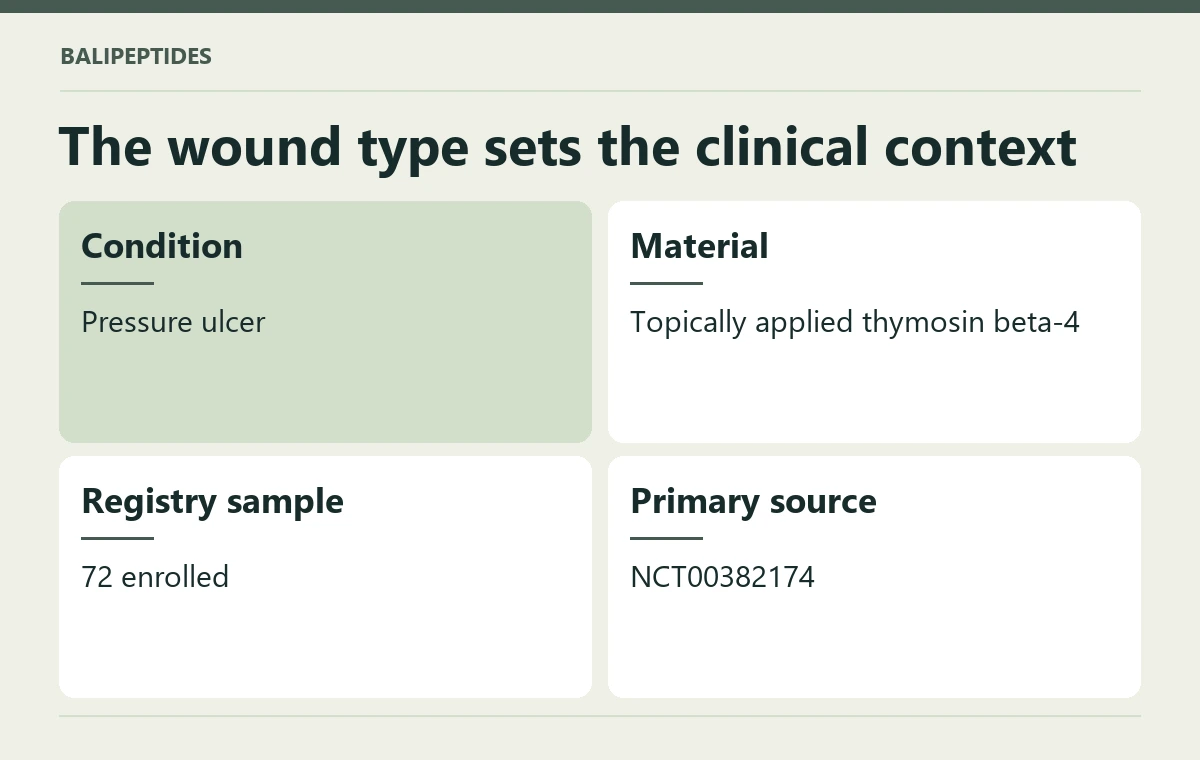
A pressure ulcer has a different clinical setting from a venous leg ulcer or an uncomplicated abrasion. A registered thymosin beta-4 study followed people with pressure ulcers and specified safety and tolerability of topical application. Correctly naming the wound matters before comparing the protocol with an unrelated sports claim.
The wound type sets the clinical context
Repeated pressure, mobility, dressings and care conditions can affect what happens to a pressure wound. A study of a topical product can define these circumstances and follow a lesion over time. Looking only at the word “healing” erases the type of wound, tested preparation and treatment setting. The record distinguishes tolerability from a healing-effectiveness assessment over follow-up. An open wound needs appropriate clinical attention; a research title is no basis for applying a local commercial blend.
Who remained under observation matters
Suppose an ulcer becomes narrower but remains open while a patient's time spent in the same position also changes during follow-up. The final photograph alone cannot separate care conditions from a study treatment. Ask how the wound outcome was defined, when it was assessed and what comparison the registered protocol planned to make.
Wound location and the underlying cause influence how a clinical team defines improvement. Measures to relieve pressure are part of the broader care context. A product observation made within that context cannot demonstrate what would happen without appropriate care, or in a wound caused by a different process. The comparison arm and follow-up tell the reader what was actually tested.
Participant and measurement details
- People in the record: 72 (actual enrollment). Eligible ages: 18 years to 85 years.
- Clinical setting: Pressure Ulcers.
- Named study interventions: Placebo, Thymosin Beta 4.
- Study design: phase 2, interventional, randomized, parallel. Masking: quadruple.
- Measured here: Safety and tolerability of topical thymosin beta-4 in pressure ulcers.
- Research locations listed in the record include: Montgomery, United States and Beverly Hills, United States.
- Study calendar in the registration: start 2006-05; primary completion 2008-12.
- Primary record: RegeneRx Biopharmaceuticals, Inc.. ClinicalTrials.gov, NCT00382174.
A Bali BPC-157 plus TB-500 product page names a two-ingredient pen. A pressure-ulcer study naming topical thymosin beta-4 is evidence about its specified study material, not a guide to buying or applying that blend for a wound.
