Tesamorelin in COPD-related muscle wasting: what a three-participant study can establish
A protocol can have an important clinical question and still enroll too few people to provide a precise comparative answer.
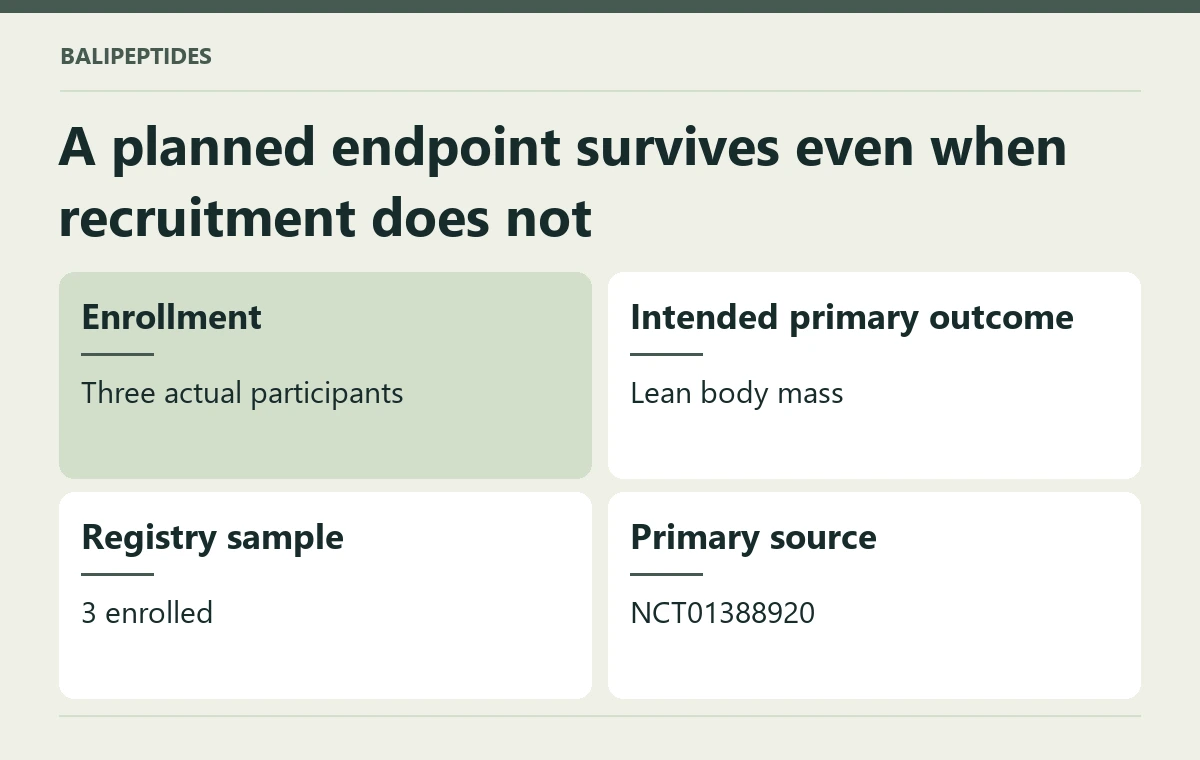
A protocol can have an important clinical question and still enroll too few people to provide a precise comparative answer. The tesamorelin study in COPD-associated muscle wasting ended early and reported actual enrollment of three. The distinction between its intended endpoint and available evidence is unusually visible here.
A planned endpoint survives even when recruitment does not
Three participants cannot meaningfully represent the full range of COPD severity, nutrition, activity and other treatments encountered in practice. A very small sample can contribute observations, but it leaves large uncertainty around numerical differences. The registered secondary question about exercise capacity also differs from lean mass. An individual can have a change in one without a proportionate change in the other. Use the record to understand the hypothesis and recruitment history rather than presenting the planned trial as a demonstrated benefit.
Who remained under observation matters
With three participants, one person's result accounts for a third of the group if everyone is analysed. A missed visit or a different starting level of muscle wasting can visibly change the impression created by a group average. Individual observations and the reasons for missing measurements matter particularly when interpreting a study this small.
When only three people enter, even a single person's result represents a large fraction of the group. Percentage changes can therefore appear dramatic while being imprecise. The public record is still valuable because it prevents an ambitious study plan from being mistaken for a large completed evidence base. Look for the actual enrollment and study status together when encountering a summary of this trial.
Participant and measurement details
- People in the record: 3 (actual enrollment). Eligible ages: 40 years to 75 years.
- Clinical setting: Chronic Obstructive Pulmonary Disease (COPD).
- Named study interventions: Tesamorelin, Placebo.
- Study design: phase 2, interventional, randomized, parallel. Masking: quadruple.
- Measured here: Change in lean body mass over six months as a planned primary endpoint.
- Study calendar in the registration: start 2011-09; primary completion 2011-12.
- Primary record: Theratechnologies. ClinicalTrials.gov, NCT01388920.
A Bali visitor with COPD and unintended weight loss needs assessment of the underlying problem and current care. The Tesamorelin listing does not establish that the person resembles these three participants or supply evidence for a treatment choice.
