Retatrutide maintenance research: why the starting weight matters after initial weight reduction
Losing weight initially and maintaining a reduction later are distinct research questions.
Losing weight initially and maintaining a reduction later are distinct research questions. A retatrutide maintenance protocol specifies both a starting reference and a later visit for percentage body-weight change. A number describing change across the entire study is not necessarily the same as change during a later maintenance phase.
Choose the denominator before doing the arithmetic
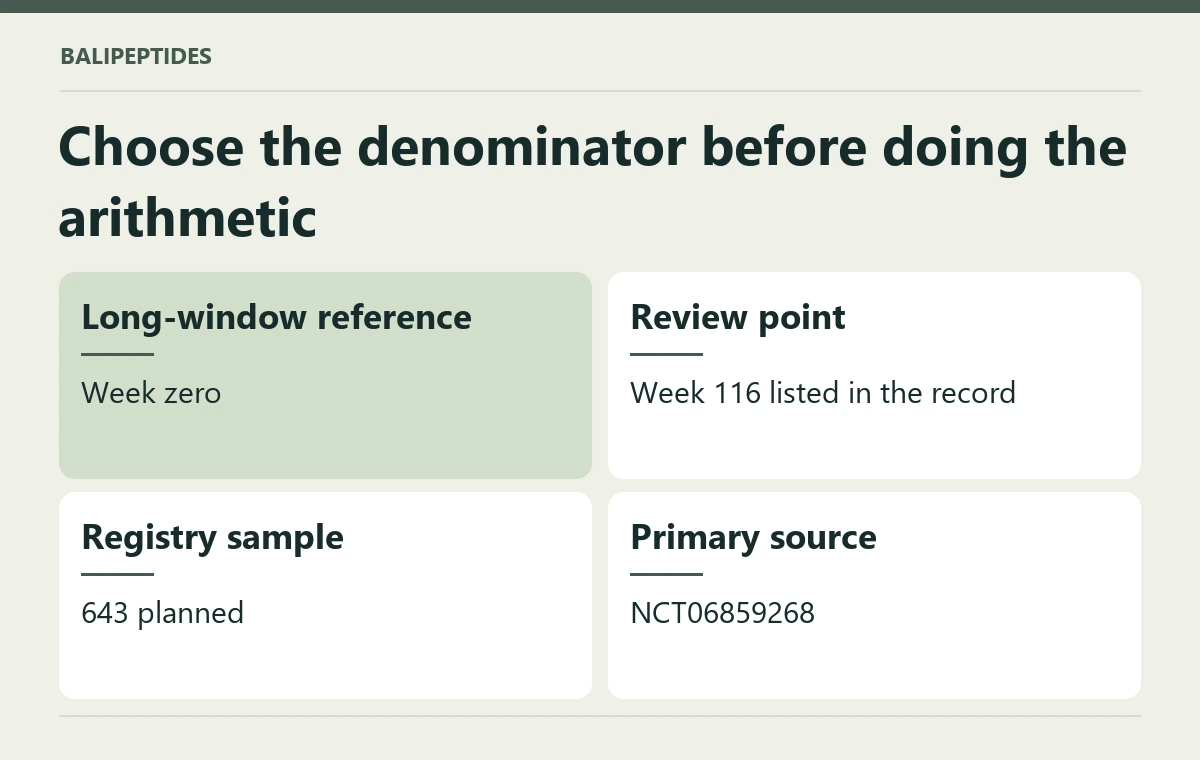
As an arithmetic illustration, a person who moves from 100 to 90 kilograms, then to 92, is below their original starting weight but above their intermediate one. Both descriptions are correct. Their percentages have different denominators. The public record includes a week-zero to week-116 measure; read the specific phase definition before quoting a shorter maintenance comparison. Whether a participant remained on the assigned strategy and had a later measurement also affects interpretation.
Who remained under observation matters
Consider a participant who starts at 100 kilograms, reaches 85 before the maintenance phase and weighs 87 at its end. The last measurement is below the original starting weight and above the maintenance starting weight. Both statements can be correct. A result called “change” is interpretable only after you identify which baseline the authors used.
A maintenance population may be selected by what happened before the maintenance comparison. Someone who did not enter that phase cannot contribute the same follow-up measurements as someone who did. Distinguish initial enrollment, eligibility for the next phase and the number with a final weight measurement. Otherwise a result about people who reached a later stage can be mistaken for a forecast for everybody starting treatment.
Participant and measurement details
- People in the record: 643 (planned enrollment). Eligible ages: 18 years and older.
- Clinical setting: Obesity.
- Named study interventions: Retatrutide, Placebo.
- Study design: phase 3, interventional, randomized, parallel. Masking: double.
- Measured here: Percentage weight change across the maintenance study's stated interval.
- Research locations listed in the record include: Santa Ana, United States and Aurora, United States.
- Study calendar in the registration: start 2025-03-05; planned primary completion 2028-04.
- Primary record: Eli Lilly and Company. ClinicalTrials.gov, NCT06859268.
The Bali Retatrutide page identifies the offered whole-pen amount. It cannot tell an individual which baseline or maintenance phase a study percentage used. Keeping dates alongside recorded weights makes a much better basis for an individual discussion with a clinician.
