Retatrutide in hepatic impairment: why a liver-function grouping is different from measuring liver fat
This retatrutide study grouped participants by hepatic function and tracked the amount of investigational medicine in circulation over time.
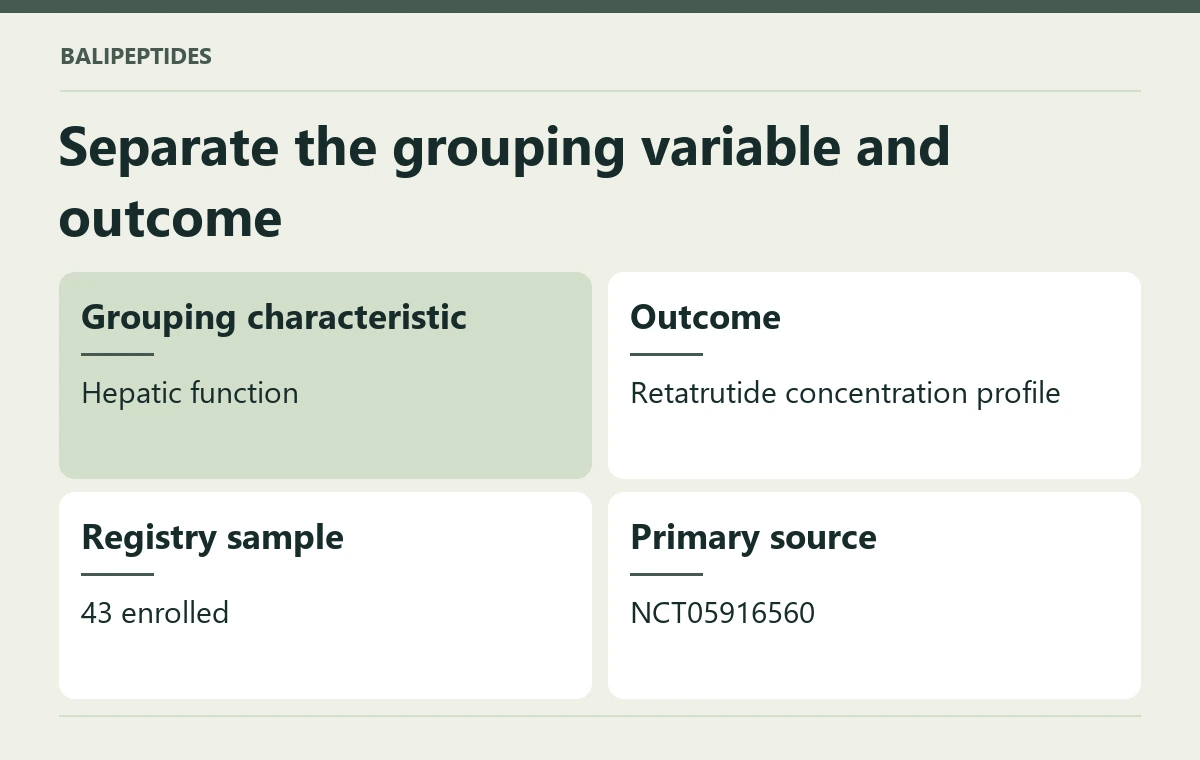
This retatrutide study grouped participants by hepatic function and tracked the amount of investigational medicine in circulation over time. The grouping describes a clinical characteristic. The outcome is a drug-exposure measurement. Neither is a scan measuring how much fat is present in the liver.
Separate the grouping variable and outcome
A liver-related trial title can therefore sit beside fatty-liver research in a search result while addressing a different problem. Here a maximum observed concentration and an integrated exposure measure inform pharmacokinetic understanding. Neither tells us whether inflammation improved. Readers with a liver condition should bring their diagnosis and complete medicines list to a clinician for advice. Copying a research exposure figure into an individual treatment decision would ignore product identity, population and medical context.
Read the shape of an exposure curve
Imagine filing two reports in a patient folder. One assigns a liver-function category before retatrutide administration, then shows blood concentrations over time. The other compares images of liver fat at two visits. Only the second contains two observations of liver fat. No amount of detail about the first report's blood tests changes that distinction.
Compare a person assigned to a hepatic-function group with a person who has a report of liver steatosis. Both descriptions concern the liver, yet the grouping rules and clinical findings may differ. Neither establishes the other without further information. That distinction is central to a pharmacokinetic study because the intended comparison concerns the exposure curve across defined physiological groups.
Participant and measurement details
- People in the record: 43 (actual enrollment). Eligible ages: 18 years to 85 years.
- Clinical setting: Healthy, Hepatic Insufficiency.
- Named study interventions: LY3437943.
- Study design: phase 1, interventional, non randomized, parallel.
- Measured here: Systemic retatrutide exposure across the registered hepatic-function groups.
- Research locations listed in the record include: Chandler, United States and DeLand, United States.
- Study calendar in the registration: start 2023-07-13; primary completion 2025-03-02.
- Primary record: Eli Lilly and Company. ClinicalTrials.gov, NCT05916560.
The Retatrutide pen catalogued in Bali is marked in milligrams. A documented liver diagnosis and a measured concentration curve answer other questions. To evaluate a claim about fatty-liver treatment in particular, seek the actual liver outcome rather than relying on this hepatic-impairment study title.
