
In this article
Tesamorelin and tirzepatide address different biological pathways and are not interchangeable “belly-fat pens”. Tesamorelin is a growth-hormone-releasing hormone analogue; tirzepatide acts at GIP and GLP-1 receptors. When comparing them in Bali, first decide whether the question concerns total body weight, a specific fat compartment or the exact product being offered.
Tesamorelin vs tirzepatide: start with the outcome
| Question | Tesamorelin | Tirzepatide |
|---|---|---|
| Main pathway | Growth-hormone-releasing hormone signalling | GIP and GLP-1 receptor signalling |
| Important evidence context | Excess abdominal fat in adults with HIV-associated lipodystrophy | Defined diabetes and obesity medicine programmes |
| Commonly confused outcome | Visceral-fat change versus total weight | Total weight versus the location of fat loss |
| What does not follow | That any abdominal-fat concern matches the studied condition | That weight change guarantees a particular waist appearance |
The Egrifta WR information explicitly says its tesamorelin medicine is not indicated for weight-loss management. Zepbound's information describes a different medicine and pathway. An indication for one exact product cannot be transferred to every pen bearing its ingredient name.
A waist measurement is not a visceral-fat measurement
“Belly fat” can mean different things to different readers: appearance in a photograph, waist circumference, a body-composition report or a diagnosed medical condition. These are not interchangeable measurements. The first step in a useful comparison is to identify what was actually measured, rather than treating all four as the same endpoint.
A reduction in body weight is also not a map showing where each kilogram came from. Likewise, a result for an abdominal fat compartment does not automatically describe the change a person will see on a household scale. This is why trial tables should keep weight, waist and fat-compartment outcomes in separate rows.
The direct tirzepatide-versus-semaglutide obesity trial illustrates a study built around defined weight and waist endpoints. It does not compare tirzepatide with tesamorelin. Using its result to declare a winner between the two products discussed here would answer a question the trial did not test.
Why the studied population matters
A study in people with HIV-associated lipodystrophy cannot simply be renamed a study of otherwise healthy visitors wanting a flatter stomach. The condition, treatment context and outcome are part of the evidence. Leaving them out makes the conclusion broader than the research.
Similarly, the word “obesity” in a study is not a substitute for a personal assessment. A catalogue category tells you where a product appears in a shop. It does not decide whether the clinical question applies to you.
If your main interest is how tesamorelin differs from another growth-hormone-releasing compound, our tesamorelin and CJC-1295 comparison stays within that separate mechanism question.
Compare the actual Bali catalogue items
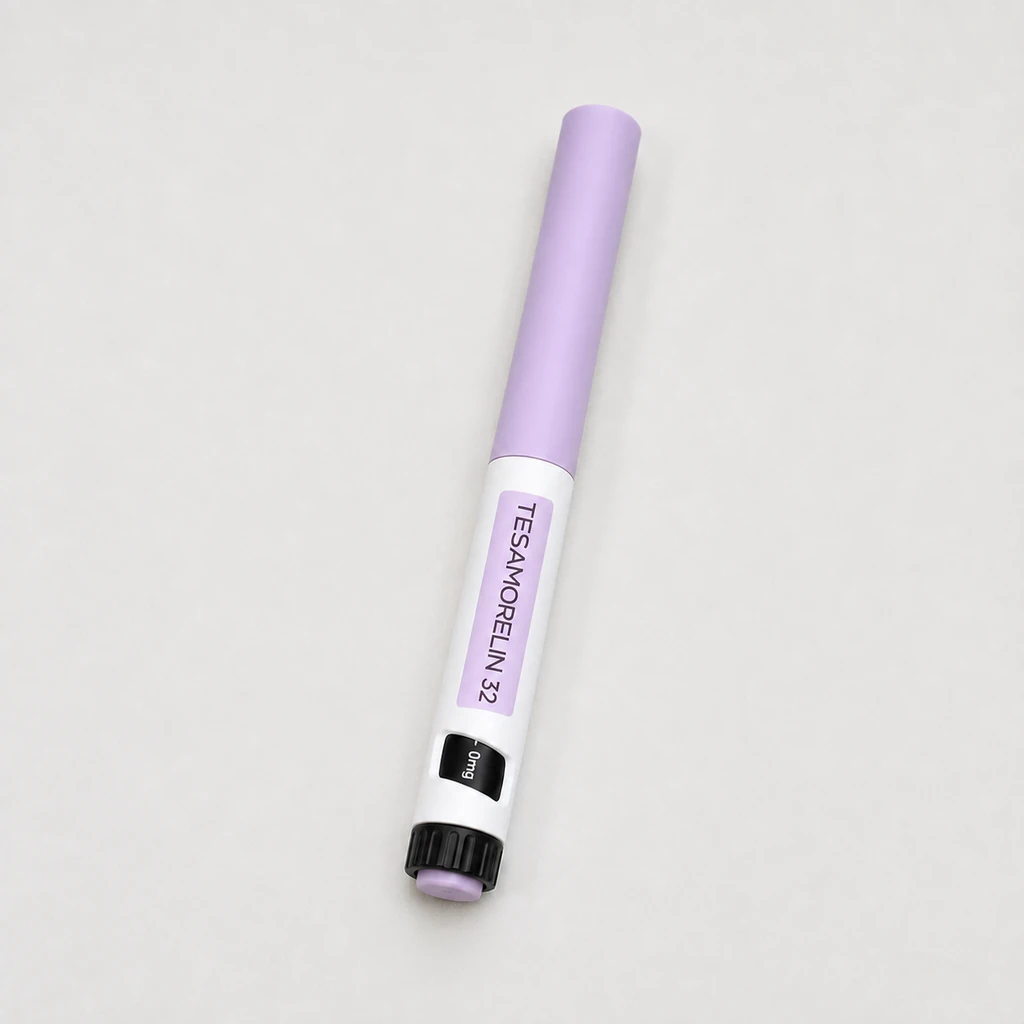
Our tesamorelin listing describes a 32 mg pen. Our tirzepatide listing offers 30 mg and 60 mg formats. These are total labelled contents, not an equivalence table or recommended administration amounts.
For a focused enquiry, name the product and the outcome you are trying to understand. For example: “I want to understand what this study measured, and whether it concerns the same formulation.” That is more informative than asking which pen is “best for belly fat”. A clinician can then address the health question; the seller can clarify the exact item and its documents.
If you already have a scan or body-composition report from Bali, retain its method, date and the actual reported measure. Comparing a scan result with an unrelated percentage from a product page creates apparent precision without a valid comparison.
Questions readers ask
Is tesamorelin a GLP-1 alternative?
It is a different molecular pathway, not another name for a GLP-1 receptor agonist. Whether a different treatment is appropriate cannot be determined from shared placement in a body-composition category.
Can I compare the same number of milligrams?
No. The ingredients are different, and equal mass is not equal biological effect. Pen totals cannot establish an interchangeable treatment or a switching schedule.
Does a combination solve both questions automatically?
No. Separate evidence for two compounds does not establish the effect or safety of using them together. A combined shopping basket is not a clinical trial of that combination.
Sources
- EGRIFTA WR prescribing information
- ZEPBOUND prescribing information
- Tirzepatide as Compared with Semaglutide for the Treatment of Obesity
Source and editorial checks completed. How these articles are prepared.