Tirzepatide measured in breast milk: what a sampling study can establish
A study that samples breast milk can measure whether and how much of a medicine is detected under its protocol.
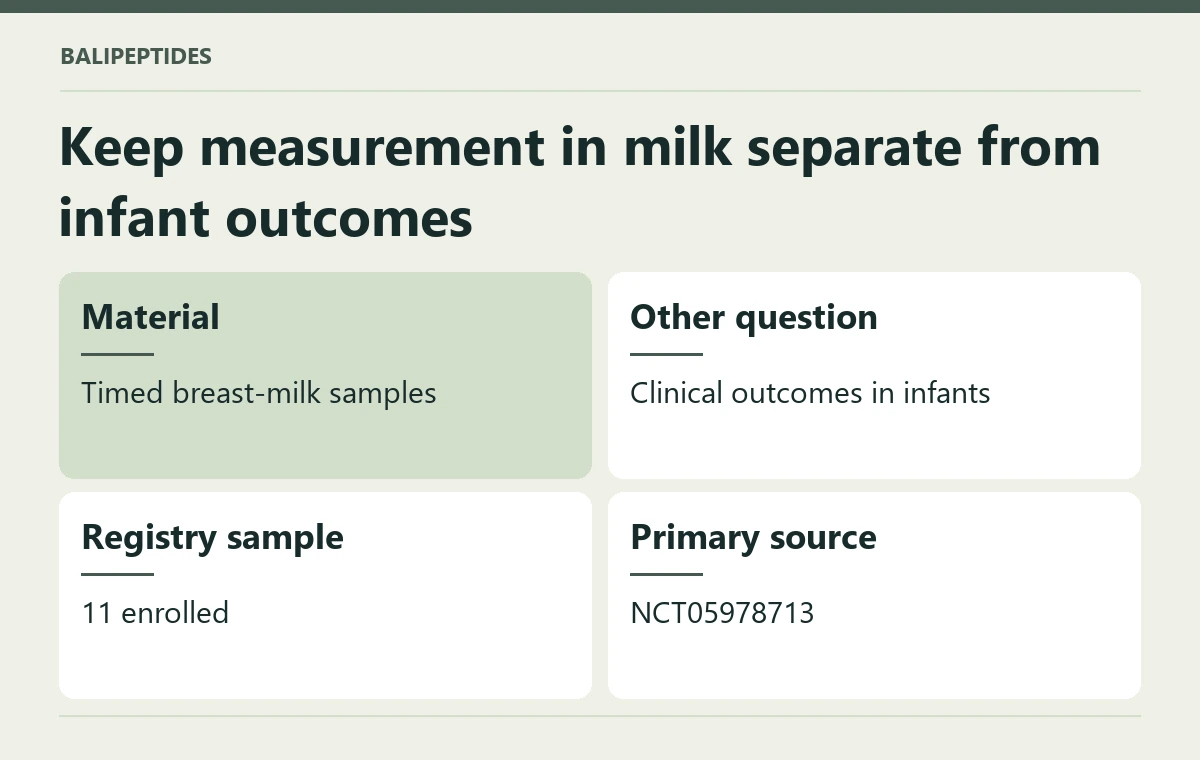
A study that samples breast milk can measure whether and how much of a medicine is detected under its protocol. It does not automatically measure the health of exposed infants. A tirzepatide registry entry in healthy lactating participants sets out a pharmacokinetic question with timed collection.
Keep measurement in milk separate from infant outcomes
Timing and analytical sensitivity matter. A value below a method's quantification limit has a different meaning from a measured concentration, and neither alone provides a complete infant safety assessment. Individual factors, the precise medicine and the clinical need all belong in a discussion with the prescribing professional and the infant's clinician. A person in Bali should not start, stop or change treatment because a graph mentions milk. The study's contribution is the specific exposure evidence it collects.
Read the shape of an exposure curve
In a milk-sampling study, the amount of milk analysed in the laboratory and the total volume an infant consumes are different quantities. A reported concentration needs its collection time and units. A calculation about an infant would also require assumptions about feeding, and an observation about infant health would require follow-up of the infant itself.
Collection schedules can make a large difference to a milk exposure estimate. A single sample may capture a low point or a higher point, whereas serial samples can describe variation over an interval. Details about which parent compound was measured and the analytical limit belong with claims of detectable or undetectable levels. Avoid replacing those details with an absolute statement about infant safety.
Participant and measurement details
- People in the record: 11 (actual enrollment). Eligible ages: 18 years and older. Female participants only.
- Clinical setting: Healthy.
- Named study interventions: Tirzepatide.
- Study design: phase 1, interventional, single group.
- Measured here: Tirzepatide exposure in sampled breast milk over the specified collection period.
- Research locations listed in the record include: Las Vegas, United States.
- Study calendar in the registration: start 2023-07-31; primary completion 2024-03-12.
- Primary record: Eli Lilly and Company. ClinicalTrials.gov, NCT05978713.
The Tirzepatide variants shown in Bali distinguish complete-pen content. They do not give an infant exposure assessment. A clinician assessing breastfeeding and prescribed treatment can use the exact formulation and the available lactation evidence alongside the individual clinical circumstances.
