Cardiac steatosis in HIV: where a growth hormone study looked for fat
The registered heart-muscle lipid measure in an HIV cohort differs from visceral fat, liver fat and an individual heart-failure diagnosis.
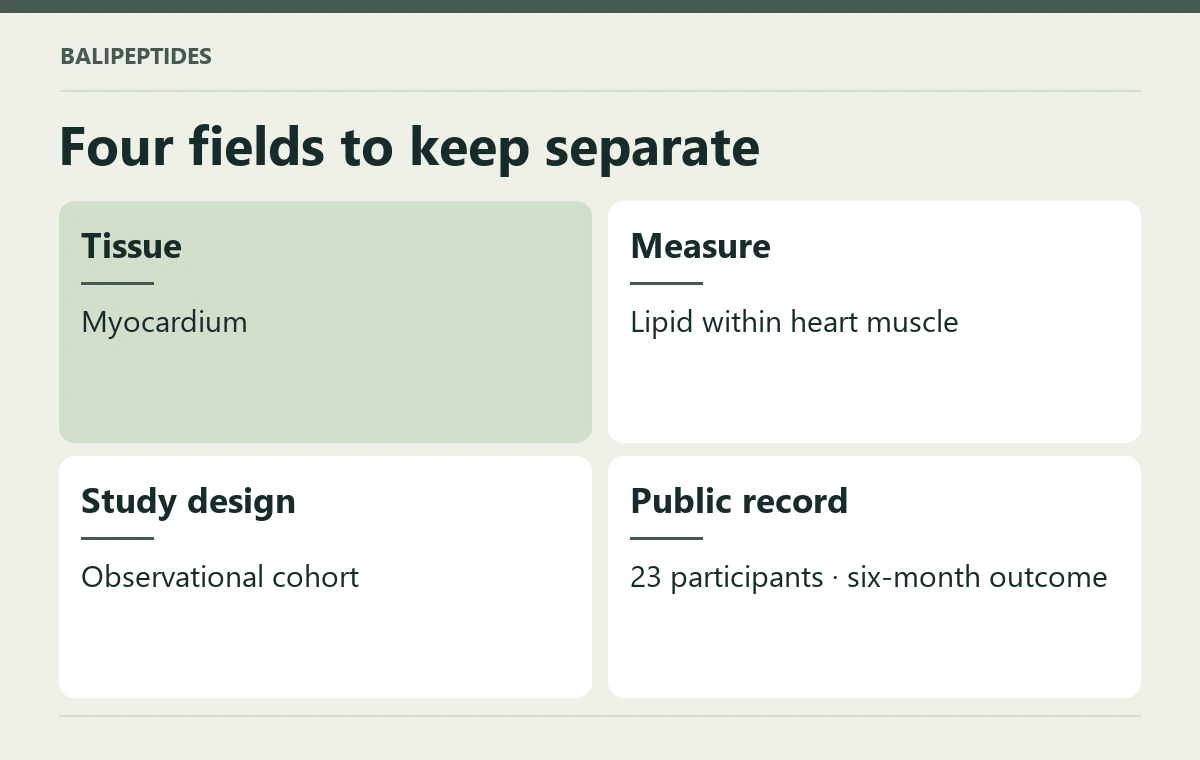
Fat within heart muscle, fat around the heart and fat in the abdomen are different measurements. A study of growth hormone dynamics in people living with HIV specified lipid within the myocardium as its primary outcome. Its title can appear in searches for tesamorelin in Bali because the registry discusses earlier work on growth hormone signalling. Read the record closely before translating that association into a treatment claim.
Locate the fat on the anatomy diagram
The myocardium is the muscular wall of the heart. Intramyocardial lipid describes fat within that tissue. A measurement of fat surrounding the heart describes another anatomical compartment; a waist measurement encompasses different structures again. A change in liver fat from a separate research paper cannot stand in for the cardiac measure. Even a study reporting a change in heart-muscle lipid would need additional observations to determine what happened to symptoms or later clinical events.
What the registry actually describes
The public ClinicalTrials.gov record identifies an observational cohort, records 23 participants, and gives a six-month time frame for the intramyocardial lipid outcome. Its background discusses previous observations involving tesamorelin. Background evidence explains why investigators asked their next question. It does not transform an observational cohort into a randomized test showing a retail pen prevents heart failure. Read the design and outcome fields alongside the narrative summary. Original registry entry NCT03826160
A useful way to annotate the record is to draw three columns: measured quantity, anatomical location and patient outcome. Put lipid content, heart muscle and the clinical outcome of interest in the appropriate columns. If the outcome you care about is hospitalization, an imaging measurement does not fill that column simply because both refer to the heart. Follow-up duration also matters when a question concerns a long-term event.
Making a product comparison in Bali
The Tesamorelin page identifies a local 32 mg pen. That is a catalogue fact. It neither identifies a person's cardiac lipid content nor shows that their circumstances match the cohort. If you already have a cardiac or abdominal imaging report, bring its actual wording to the clinician who ordered it. Ask which compartment was measured, which method was used, and what prompted the test. These details help distinguish an established observation in an individual from a hypothesis about interactions between HIV, growth hormone secretion and fat distribution. They also prevent a misleading side-by-side comparison between a result reported in percentages and a product listed in milligrams.
