MOTS-c as a prognostic marker in coronary disease: what prediction would establish
A cohort can ask whether a measured MOTS-c value helps predict a later event in people with diabetes and coronary artery disease.
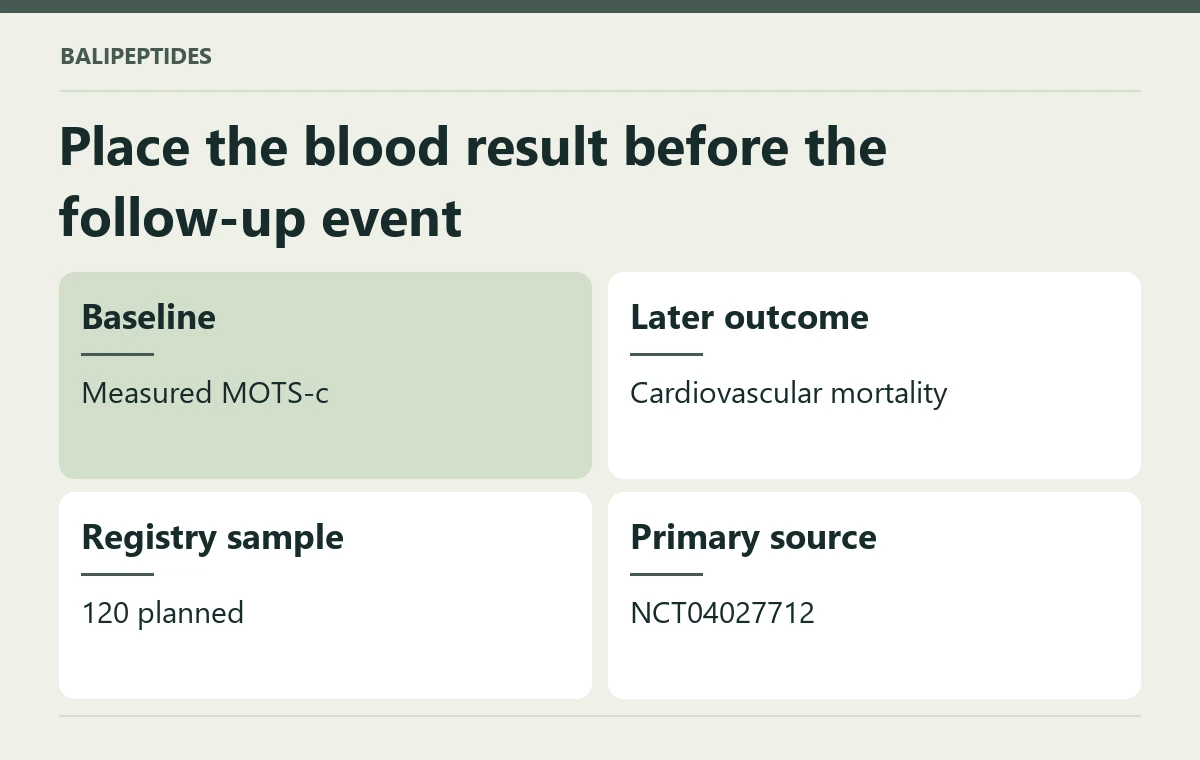
A cohort can ask whether a measured MOTS-c value helps predict a later event in people with diabetes and coronary artery disease. That is different from giving MOTS-c to reduce risk. In this registration the observation comes first and later clinical outcomes supply the follow-up. The peptide's two possible roles must stay separate.
Place the blood result before the follow-up event
Suppose higher values were observed more often in people who later experienced an event. The association could reflect disease severity, another underlying process or a useful independent signal. Distinguishing these explanations requires careful analysis and usually independent validation. Turning that observation into a claim that raising or lowering the marker prevents events would add another untested step. This older public registration specifies a planned sample and follow-up; its listing alone should not be quoted as a demonstrated risk reduction or evidence of a treatment effect.
A biological marker can answer a narrow question well
A proposed prognostic marker should be judged on what happens after it is measured. For example, researchers can ask whether it adds useful information for two people with similar conventional risk factors. Finding an association would still leave a separate question about whether giving MOTS-c would change either person's outcome.
A proposed prognostic marker becomes more useful when it improves prediction beyond information clinicians already possess. Diabetes history, coronary disease severity and other health characteristics can influence background risk. A study would need a clear analytic comparison to show added prognostic value, followed by testing in another appropriate population. Merely measuring a marker before an event is a necessary first step, not the whole demonstration.
Participant and measurement details
- People in the record: 120 (planned enrollment). Eligible ages: 18 years and older.
- Clinical setting: Diabetes, Clopidogrel Resistance.
- Study design: observational, case only, prospective.
- Measured here: The association between MOTS-c and subsequent cardiovascular mortality.
- Research locations listed in the record include: Chaïdári, Greece.
- Study calendar in the registration: start 2014-01-01; planned primary completion 2019-12-31.
- Primary record: University of Athens. ClinicalTrials.gov, NCT04027712.
The MOTS-c listing in Bali describes a commercial amount. It is not a result from the cohort and has no role in assigning a reader a cardiovascular risk category. The actual question to pursue is whether a published analysis of this cohort reported a validated association.
