NAM, NR and NMN: how a whole-blood study compares three NAD precursors
Three molecules can contribute to NAD metabolism while still being different interventions.
Three molecules can contribute to NAD metabolism while still being different interventions. This protocol separately identifies nicotinamide, nicotinamide riboside and nicotinamide mononucleotide. Researchers selected whole-blood NAD+ after oral exposure as a primary comparison, rather than an advertised feeling of energy.
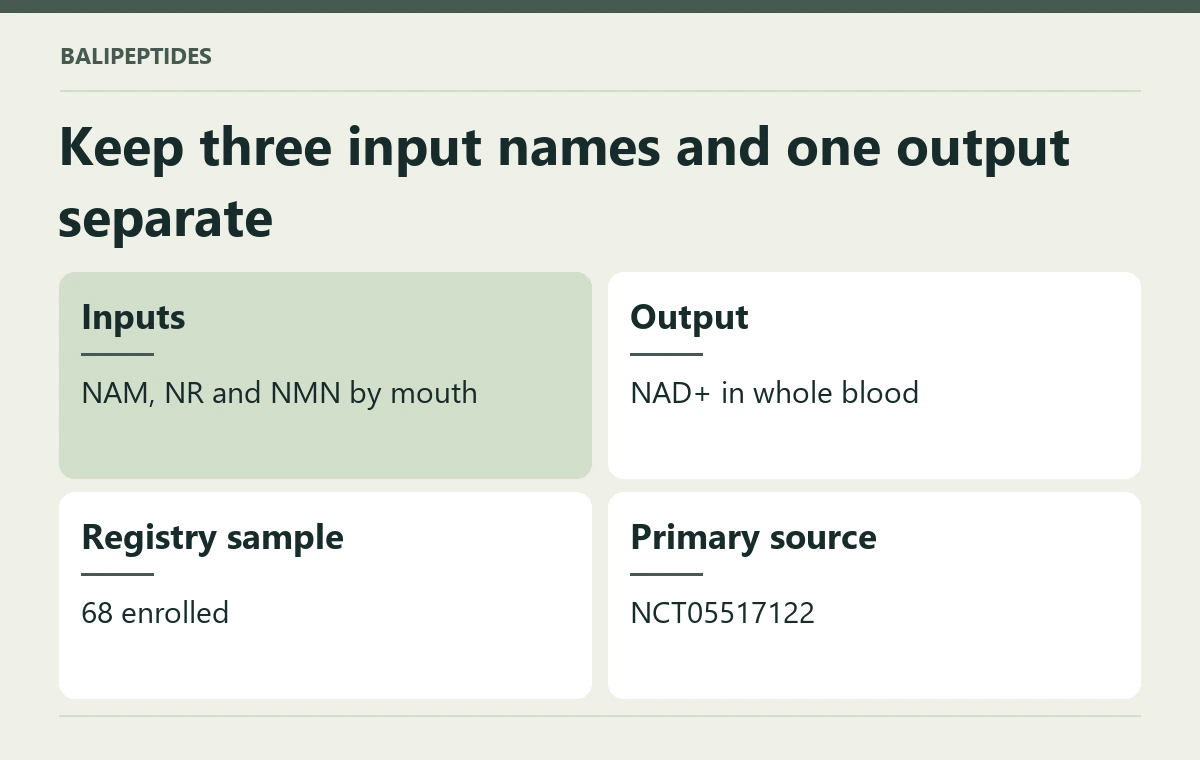
Keep three input names and one output separate
The registered day-14 comparison has a defined material and time point. It should not be relabelled as a comparison of skin, brain or muscle concentrations. Nor should all three precursor names be abbreviated to “NAD+” on the treatment side of the equation. A result table can compare changes among arms even though none of the arms represents the local finished NAD+ pen. The question about a retail product would therefore need evidence matched to its own formulation and route.
Work out what the comparison group contributes
Try labelling three empty columns with the full names of the precursors. Under each, record the measured blood compound and sampling time. This prevents a common transcription error: moving a value measured after NR into a row described as direct NAD administration. The table can then be read without guessing which substance was actually supplied.
Whole blood contains cells as well as plasma. A number obtained from whole blood therefore should not be put alongside a plasma value as if they came from the same specimen. The three precursor arms also make it important to report a comparison between groups, rather than treating three separate before-and-after changes as a ranking on their own.
Participant and measurement details
- People in the record: 68 (actual enrollment). Eligible ages: 18 years to 50 years.
- Clinical setting: Healthy.
- Named study interventions: Nicotinamide (NAM), Nicotinamide Riboside (NR), Nicotinamide Mono Nucleotide (NMN), Microcrystalline cellulose.
- Study design: interventional, randomized, parallel.
- Measured here: The increase in whole-blood NAD+ after the individual oral precursors.
- Research locations listed in the record include: Lausanne, Switzerland.
- Study calendar in the registration: start 2022-07-12; primary completion 2022-11-24.
- Primary record: Société des Produits Nestlé (SPN). ClinicalTrials.gov, NCT05517122.
The NAD+ listing for Bali names the downstream molecule on the pack. If a study citation names NR or NMN, copy the full intervention into a note instead of abbreviating all compounds to NAD. This preserves exactly which comparison the research can inform.
