Retatrutide and meal size: why a lunch-and-dinner experiment cannot count a whole week of eating
A controlled meal makes food intake measurable.
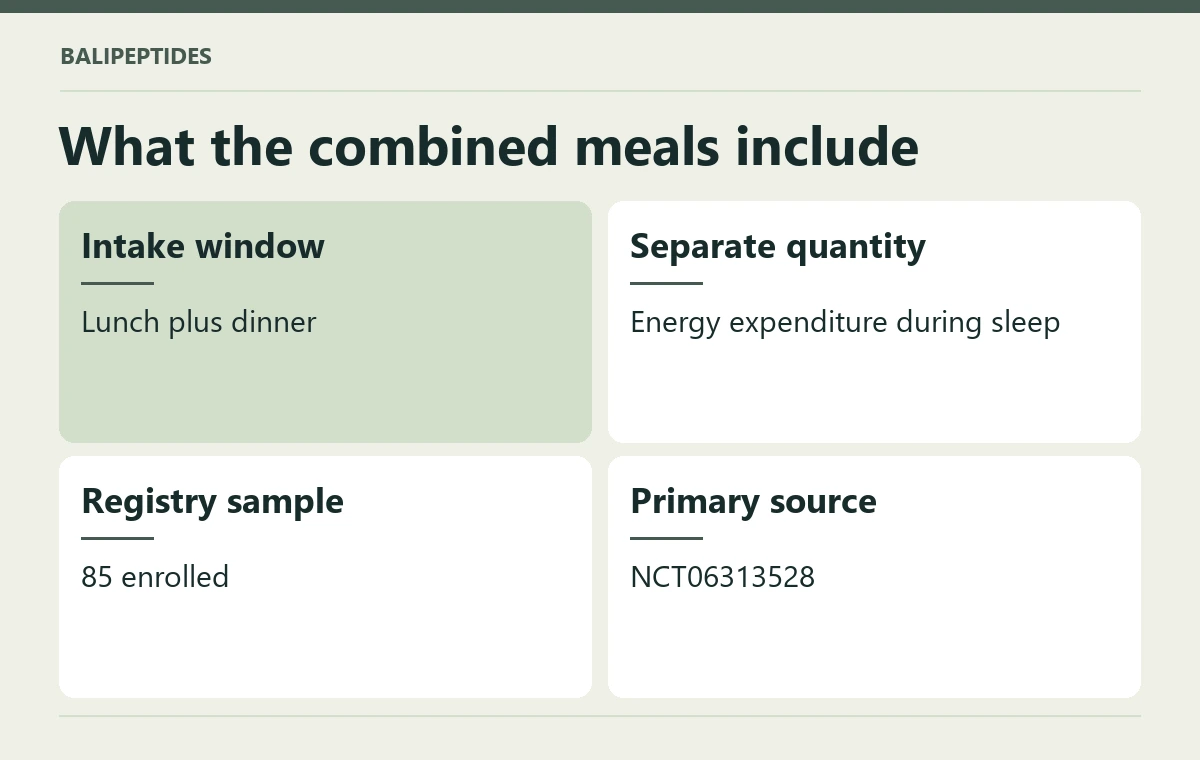
A controlled meal makes food intake measurable. This retatrutide study names the change in calories consumed during lunch and dinner combined as a primary outcome. That definition excludes whatever occurred outside the selected meals unless the protocol measured it separately.
What the combined meals include
Someone could eat less at lunch and more at dinner yet have the same combined intake. The total does not tell us which meal changed. A smaller combined figure also does not reveal why someone stopped eating. Appetite, taste and meal selection are possible questions, each with its own methods. Look for separate measures rather than assigning a mechanism to a calorie number. The protocol includes sleep metabolic rate as another observation; expenditure while asleep is a different side of the energy balance.
Distinguish the laboratory meal from the rest of the day
A lunch tray and a dinner tray give researchers two defined opportunities to measure consumption. They leave breakfast, snacks, drinks and other days outside that measurement unless these were separately recorded. When someone converts the effect into a weekly calorie figure, check which meals were actually observed before accepting the multiplication.
Measurement at a scheduled meal has a practical advantage: the amount offered and the amount left can be documented under the same rules. Outside the research setting, snacks, drinks and food eaten later are harder to observe. The precision gained inside the meal experiment is therefore quite compatible with uncertainty about what happens across an entire ordinary week.
Participant and measurement details
- People in the record: 85 (actual enrollment). Eligible ages: 18 years to 60 years.
- Clinical setting: Obesity.
- Named study interventions: LY3437943, Placebo.
- Study design: phase 1, interventional, randomized, parallel. Masking: double.
- Measured here: Energy consumed across the specified lunch and dinner.
- Research locations listed in the record include: Orlando, United States and Baton Rouge, United States.
- Study calendar in the registration: start 2024-03-20; primary completion 2025-08-26.
- Primary record: Eli Lilly and Company. ClinicalTrials.gov, NCT06313528.
The 32 mg Retatrutide presentation in Bali is a product label, not a calorie measurement. If a testimonial claims a specific daily deficit from a lunch-and-dinner graph, ask whether breakfast, snacks and later compensation were measured. A combined two-meal endpoint cannot fill those gaps automatically.
