Why a tirzepatide gastric-emptying trial measured acetaminophen in blood
The name on a pharmacokinetic graph can be the test marker rather than the main treatment.
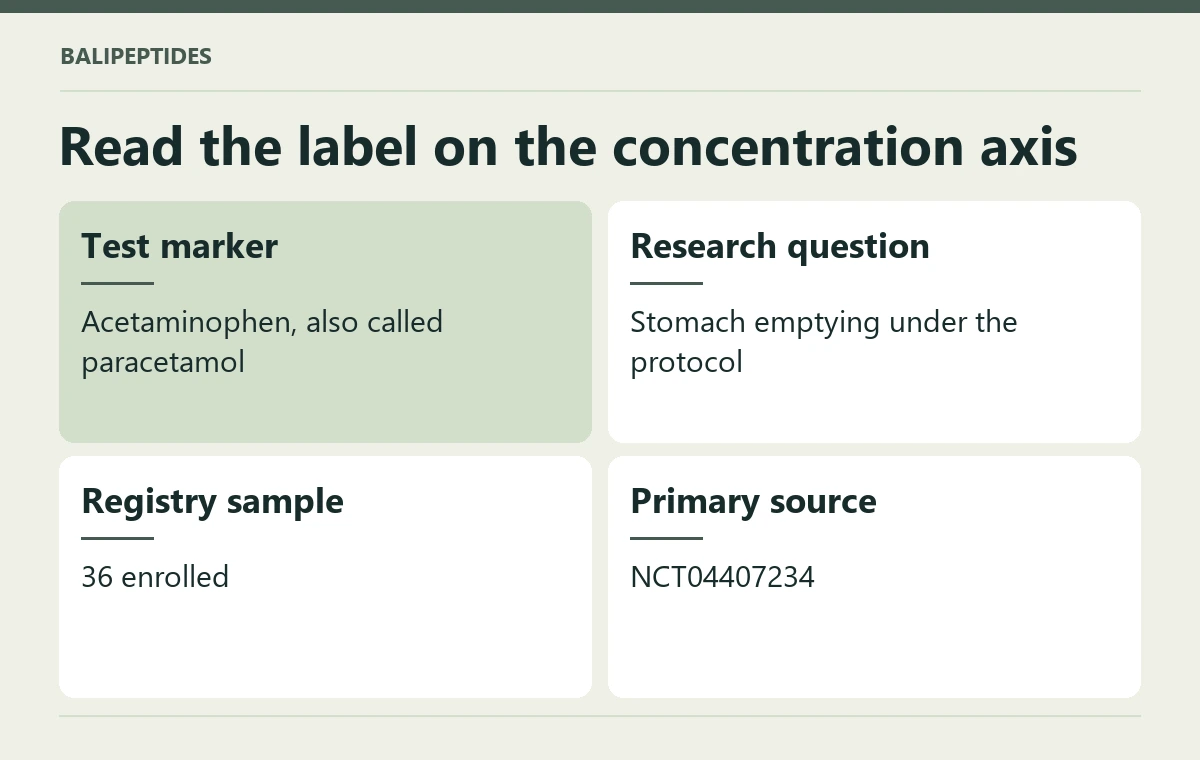
The name on a pharmacokinetic graph can be the test marker rather than the main treatment. A tirzepatide protocol used acetaminophen, also called paracetamol, to examine aspects of stomach emptying. The concentration curve therefore belongs to acetaminophen. A quick reading that labels it as the amount of tirzepatide circulating would miss the purpose of the test.
Read the label on the concentration axis
After an oral marker is taken, the resulting blood concentrations reflect a series of processes. Movement out of the stomach is one contributor; subsequent absorption and handling also matter. That makes a concentration curve an indirect measure, not a camera following food. The protocol names sampling times and concentration-based primary measurements. A conclusion about a specific meal in a person who feels full, or instructions about medicines before a procedure, would require additional clinical context. Those questions should go to the team responsible for that individual's care.
Read the shape of an exposure curve
Think of the acetaminophen measurement as a timestamp with a chemical marker attached. A later appearance in blood can help describe what happened after the test meal. It is several steps removed from asking a participant when lunch felt comfortable, and further still from predicting how long a different meal will sit on a particular afternoon.
A marker's peak can shift later even when the total amount eventually measured is similar. Conversely, a lower early measurement can reflect a sampling or absorption difference without establishing the exact rate of movement of every constituent of a meal. For a study with an indirect marker, investigate the interpretation proposed by the authors rather than inferring a mechanical measurement from the curve's appearance.
Participant and measurement details
- People in the record: 36 (actual enrollment). Eligible ages: 18 years to 65 years.
- Clinical setting: Overweight, Obesity.
- Named study interventions: Tirzepatide, Acetaminophen.
- Study design: phase 1, interventional, single group.
- Measured here: Acetaminophen concentration over time after the test procedure.
- Research locations listed in the record include: Hialeah, United States.
- Study calendar in the registration: start 2020-09-15; primary completion 2021-01-07.
- Primary record: Eli Lilly and Company. ClinicalTrials.gov, NCT04407234.
At a Bali appointment concerning Tirzepatide, the exact prescribed presentation and any symptoms belong in the medical history. A research chart naming paracetamol on its vertical axis is useful background about a test, but cannot supply an individual gastric-emptying measurement or a procedural instruction.
