Growth hormone and bone mineralization during transition to adulthood: why two years matters
A young adult with growth hormone deficiency beginning in childhood is a very specific research population.
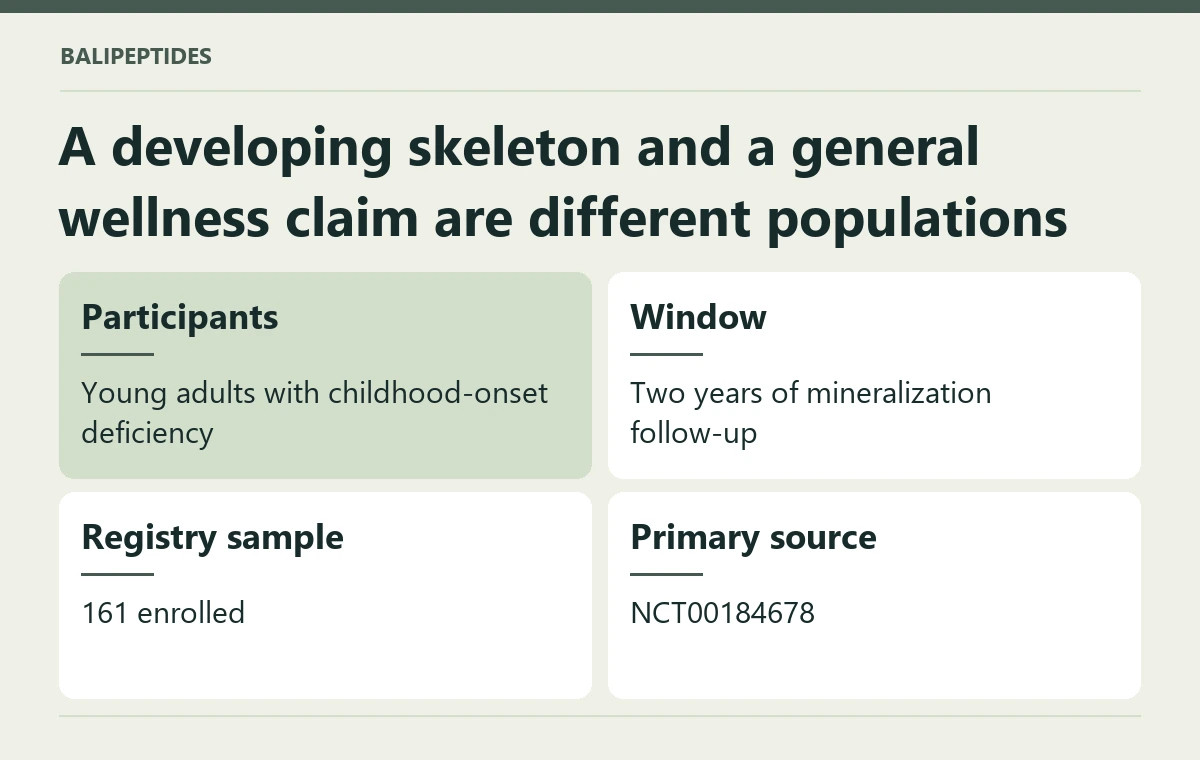
A young adult with growth hormone deficiency beginning in childhood is a very specific research population. A registered study assessed changes in bone mineralization over two years in this transition stage. Its time frame and participants are just as important as the molecule name when interpreting claims about “stronger bones”.
A developing skeleton and a general wellness claim are different populations
A bone measurement can shift gradually and can be compared at specified visits. A fracture, by contrast, is a clinical event influenced by factors including falls and exposure to trauma. Measuring mineralization over two years does not in itself establish how many fractures would be prevented over a lifetime. A statement about adult sports performance would introduce another entirely different objective. Ask which age group, duration and bone measure a claim refers to before treating it as information about a catalogue pen in Bali.
Who remained under observation matters
Someone turning eighteen may finish growing in height before the end of the observation period. That makes a question about the mineral content of bone quite different from a question about centimetres gained. Record which skeletal measurement the study uses and the interval between examinations before trying to interpret the direction of change.
An adolescent growth record and an adult bone assessment may both use familiar units yet describe different stages of development. The diagnosis beginning in childhood is an eligibility fact; it is not a conclusion that every young adult would obtain the same bone response. Duration of prior treatment and timing of follow-up help explain what a transition study is attempting to learn.
Participant and measurement details
- People in the record: 161 (actual enrollment). Eligible ages: 18 years to 25 years.
- Clinical setting: Growth Hormone Disorder, Adult Growth Hormone Deficiency.
- Named study interventions: somatropin.
- Study design: phase 3, interventional, randomized, parallel.
- Measured here: Mineralization change over two years in young adults with childhood-onset deficiency.
- Research locations listed in the record include: Parkville, Australia and Auckland, Australia.
- Study calendar in the registration: start 2002-02; primary completion 2006-07.
- Primary record: Novo Nordisk A/S. ClinicalTrials.gov, NCT00184678.
A family continuing prescribed care in Bali can keep the diagnostic history and previous bone assessments together. The Somatropin catalogue description identifies a retail pen. It cannot reconstruct the clinical transition history or substitute for a specialist's interpretation of a series of bone measurements.
