Why a tesamorelin safety study tracked graded retinal changes over three years
A protocol can monitor a concern without proving that a product caused it.
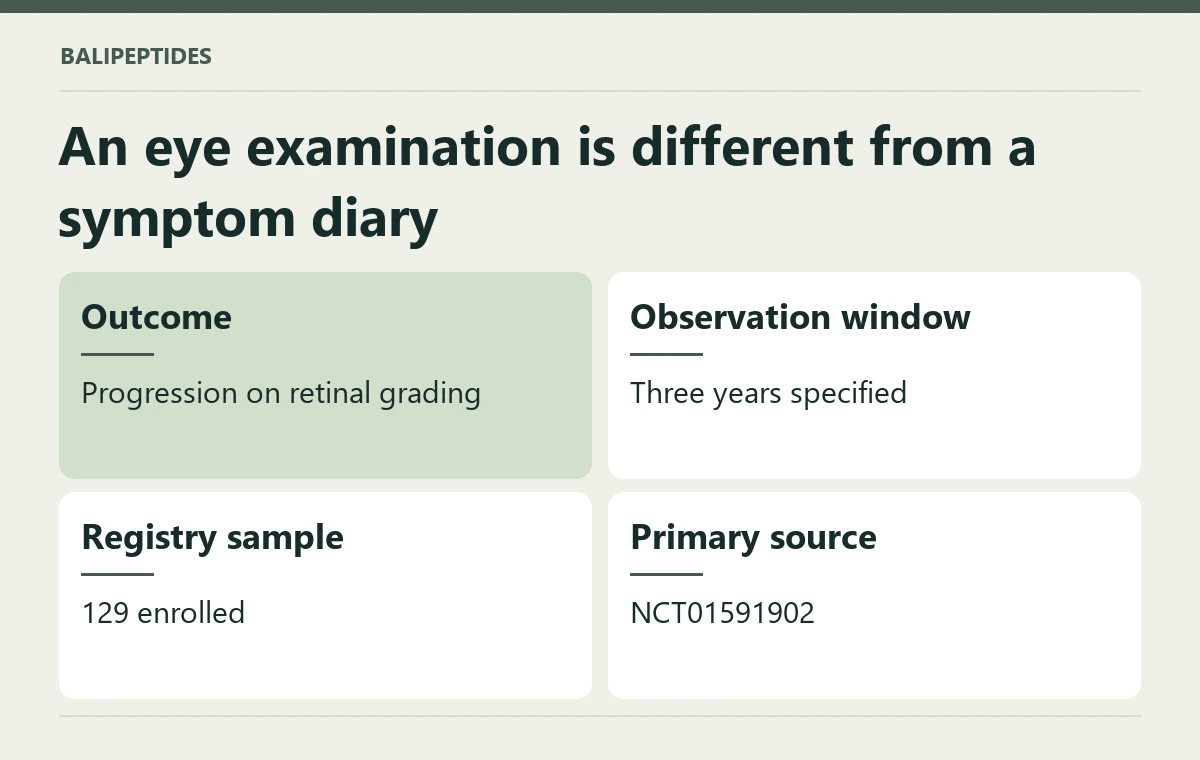
A protocol can monitor a concern without proving that a product caused it. This registry entry followed people living with HIV and diabetes who were treated with a tesamorelin presentation, with retinal disease progression as a specific outcome. A reader needs the retinal grading rule and the follow-up period before interpreting the question as a safety finding.
An eye examination is different from a symptom diary
The registered definition uses a threshold on an established retinal grading system rather than simply asking whether vision felt worse. A person can have an important eye finding with little immediate change in perceived sharpness. Conversely, transient blur need not indicate a defined progression on the retinal scale. The record notes early termination. Read the available follow-up and denominators before drawing any conclusions about frequency. A safety concern can justify monitoring and a well-defined protocol even when the eventual data are incomplete.
Who remained under observation matters
A retinal photograph read at baseline and another graded three years later form a pair. If the later image is missing, substituting a participant's report that vision feels unchanged would switch the outcome. When a safety percentage is quoted, look for the number with gradable follow-up images as well as the number who originally enrolled.
Retinopathy grading depends on an eye assessment and an agreed reference scale. Record whether progression is defined in a particular eye, across both eyes or according to another patient-level rule, then look at the follow-up available for that rule. A photograph attached to a medication box contains none of this information. It is the specialist retinal record that supports a grading comparison.
Participant and measurement details
- People in the record: 129 (actual enrollment). Eligible ages: 18 years and older.
- Clinical setting: Diabetic Retinopathy, HIV.
- Named study interventions: Tesamorelin, Placebo-Control.
- Study design: phase 4, interventional, randomized, parallel. Masking: double.
- Measured here: Progression on the study's diabetic retinopathy grading scale.
- Research locations listed in the record include: Phoenix, United States and Los Angeles, United States.
- Study calendar in the registration: start 2012-06; primary completion 2018-05.
- Primary record: Theratechnologies. ClinicalTrials.gov, NCT01591902.
A person arranging diabetes and eye follow-up in Bali should bring previous retinal assessments as well as dates and prescribed medicines. The local Tesamorelin presentation is useful for recording an identity, while the ophthalmic records establish what was actually seen over time.
