Tesamorelin research in stable type 2 diabetes: insulin response and HbA1c answer different questions
Relative insulin response and HbA1c can both appear in a diabetes study without measuring the same aspect of glucose regulation.
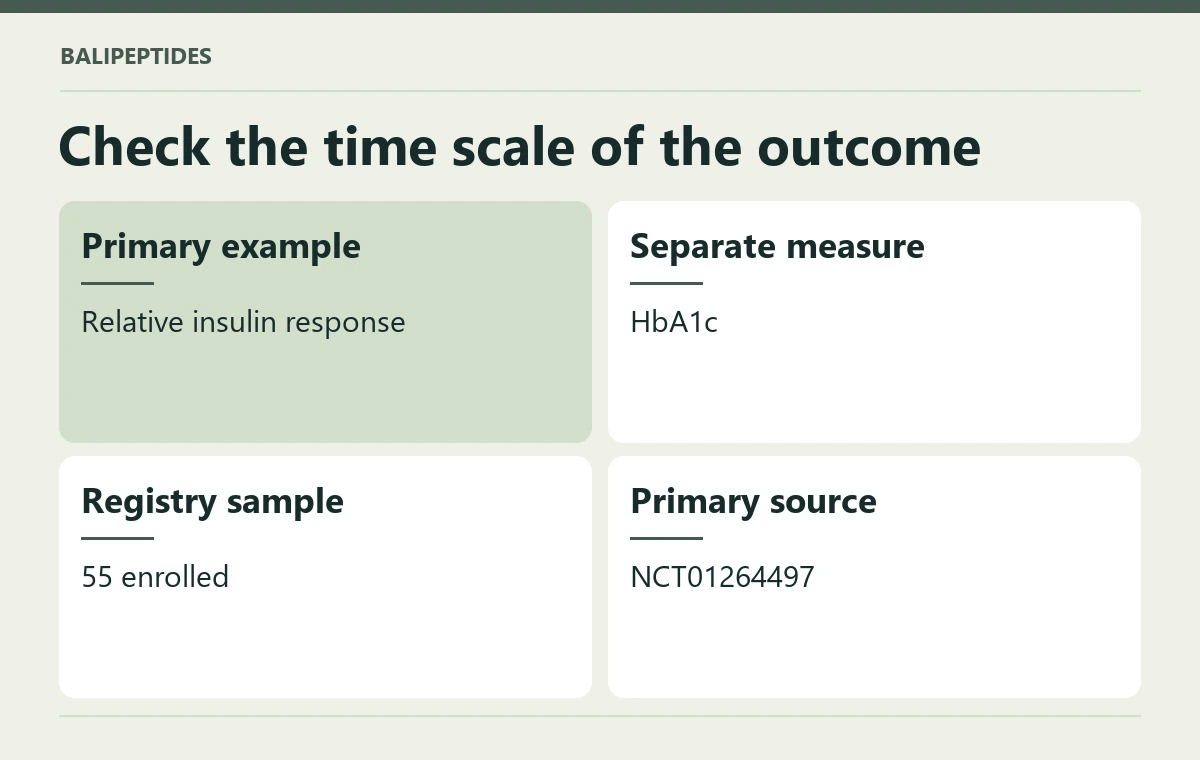
Relative insulin response and HbA1c can both appear in a diabetes study without measuring the same aspect of glucose regulation. A tesamorelin safety protocol in stable type 2 diabetes lists the former as primary and the latter separately. Confusing the two changes the time scale as well as the biological question.
Check the time scale of the outcome
A person can have a particular response to a challenge even when their longer-term glucose exposure reflects many other meals, activities and medicines. To interpret a relative response, look for its reference condition and calculation in the study details or publication. The registry names a safety study in a defined group; it should not be quoted as evidence that a commercial presentation benefits diabetes generally. A personal glucose-management question requires the person's own treatment and clinical records.
Distinguish a response from a resting measurement
Two people can have the same HbA1c while showing different insulin responses to a controlled challenge. One result describes a longer period of glucose exposure, while the other follows the response to a particular stimulus over the sampling window. Preserve the time axis on the insulin graph before interpreting a summary about glucose control.
A relative response requires something to be relative to. The denominator might be a baseline value, a comparison condition or a calculated index depending on the protocol. Before treating a percentage as a clinical improvement, find the underlying calculation and the direction that the investigators considered informative. This is especially important for a safety question, where an increase is not automatically desirable.
Participant and measurement details
- People in the record: 55 (actual enrollment). Eligible ages: 50 years and older.
- Clinical setting: Type 2 Diabetes.
- Named study interventions: TH9507.
- Study design: phase 2, interventional, randomized, parallel. Masking: double.
- Measured here: Change in relative insulin response in the registered study population.
- Study calendar in the registration: start 2002-02; primary completion 2002-11.
- Primary record: Theratechnologies. ClinicalTrials.gov, NCT01264497.
The Tesamorelin catalogue in Bali does not contain a person's baseline glucose response. If a laboratory report is being discussed, include the date, test conditions and current diabetes treatment so the clinician can distinguish a glucose challenge from longer-term monitoring.
A reader comparing reports can record the specimen date for HbA1c alongside the timed samples collected during the challenge.
