Tirzepatide and sleep metabolic rate: measuring energy use while a person sleeps
An energy-expenditure study does not always ask how many calories people eat.
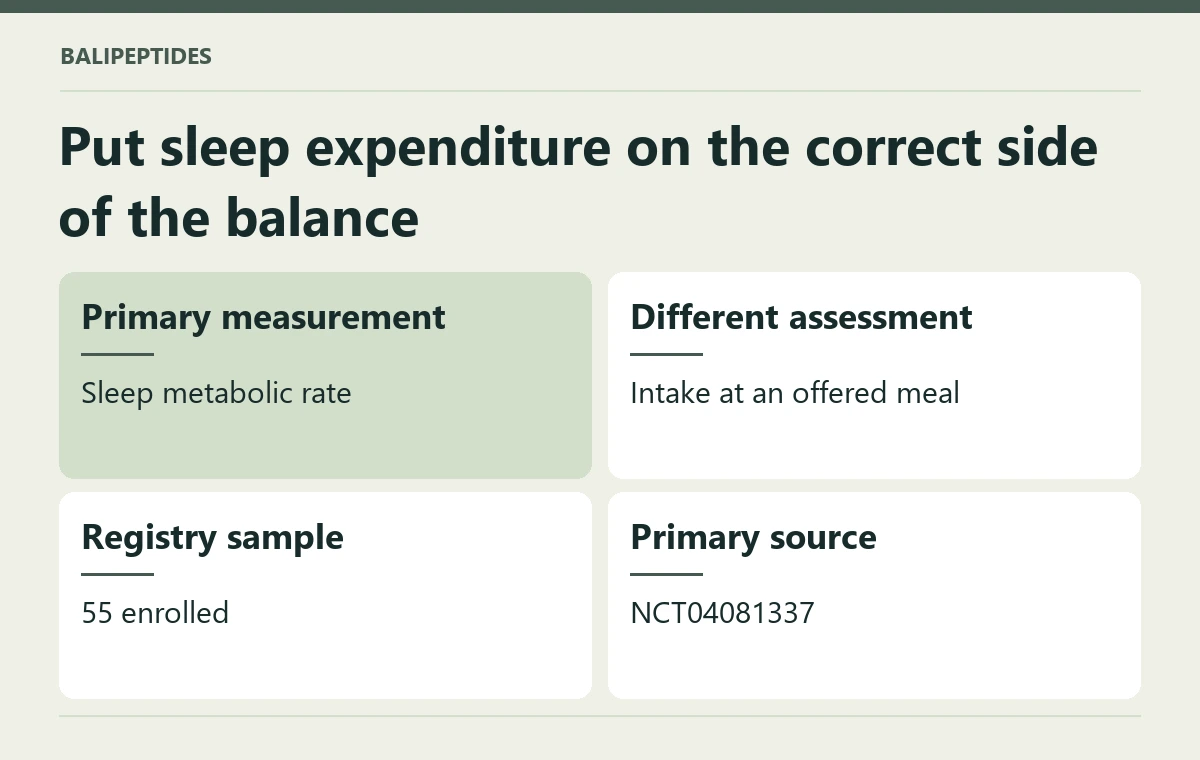
An energy-expenditure study does not always ask how many calories people eat. In this tirzepatide protocol the primary outcome was change in sleep metabolic rate. It concerns energy used under sleeping conditions, while food intake at a study meal appears as a different measurement.
Put sleep expenditure on the correct side of the balance
A lower or higher overnight expenditure, considered on its own, does not establish whether a person will gain or lose weight. Total energy balance also includes expenditure during waking activity and energy consumed. The trial's week-18 comparison defines one physiological question with its own denominator. A screenshot reporting average calorie intake should not be labelled as the primary sleep result. Look for the measurement name and its unit before comparing a graph about metabolism with a graph about eating.
Distinguish the laboratory meal from the rest of the day
Energy use captured during sleep covers a different part of the day from walking to work, exercising or eating. A lower recorded sleeping rate cannot simply be multiplied by twenty-four and called daily expenditure. The missing periods involve other activities, even for the same participant on the very same day.
Sleeping conditions place useful controls on movement but they cover a limited part of the day. Energy spent reaching a workplace, climbing stairs or training on a bicycle belongs to other components of expenditure. The study's measurement can be precise within its own interval without predicting the exact calories a particular person would use during everyday life.
Participant and measurement details
- People in the record: 55 (actual enrollment). Eligible ages: 18 years to 60 years.
- Clinical setting: Obesity.
- Named study interventions: Tirzepatide, Placebo.
- Study design: phase 1, interventional, randomized, parallel. Masking: double.
- Measured here: Change in sleep metabolic rate from baseline through week 18.
- Research locations listed in the record include: Baton Rouge, United States.
- Study calendar in the registration: start 2020-07-09; primary completion 2022-05-26.
- Primary record: Eli Lilly and Company. ClinicalTrials.gov, NCT04081337.
A Bali Tirzepatide product page shows milligrams per complete pen. It carries no measured overnight energy expenditure. To interpret a research quotation, write the sleep condition, follow-up interval and energy unit next to the figure before drawing a connection to weight change.
