Tirzepatide and Blood Pressure: The Bali Research Guide
Discover the blood-pressure improvements measured with tirzepatide in SURMOUNT-1, how weight loss contributed and which Bali pen formats you can compare.
Tirzepatide's research story includes more than a change on the scale. In analyses of SURMOUNT-1, it was associated with lower blood pressure as well as weight reduction, adding a measurable cardiometabolic outcome to the compound's profile. For people exploring tirzepatide and blood pressure in Bali, Indonesia, the interesting question is how those improvements were measured and how much of the effect was connected with weight loss.
Our catalogue presents tirzepatide as 30 mg and 60 mg pre-filled pens. The clinical findings help explain the scientific interest in the ingredient; the product listing lets you compare the exact presentation offered for your local enquiry.
What SURMOUNT-1 measured
The published blood-pressure analysis examined participants with obesity or overweight and weight-related complications. It reported a rapid decline in blood pressure during the first 24 weeks, followed by stabilisation through the 72-week observation period.
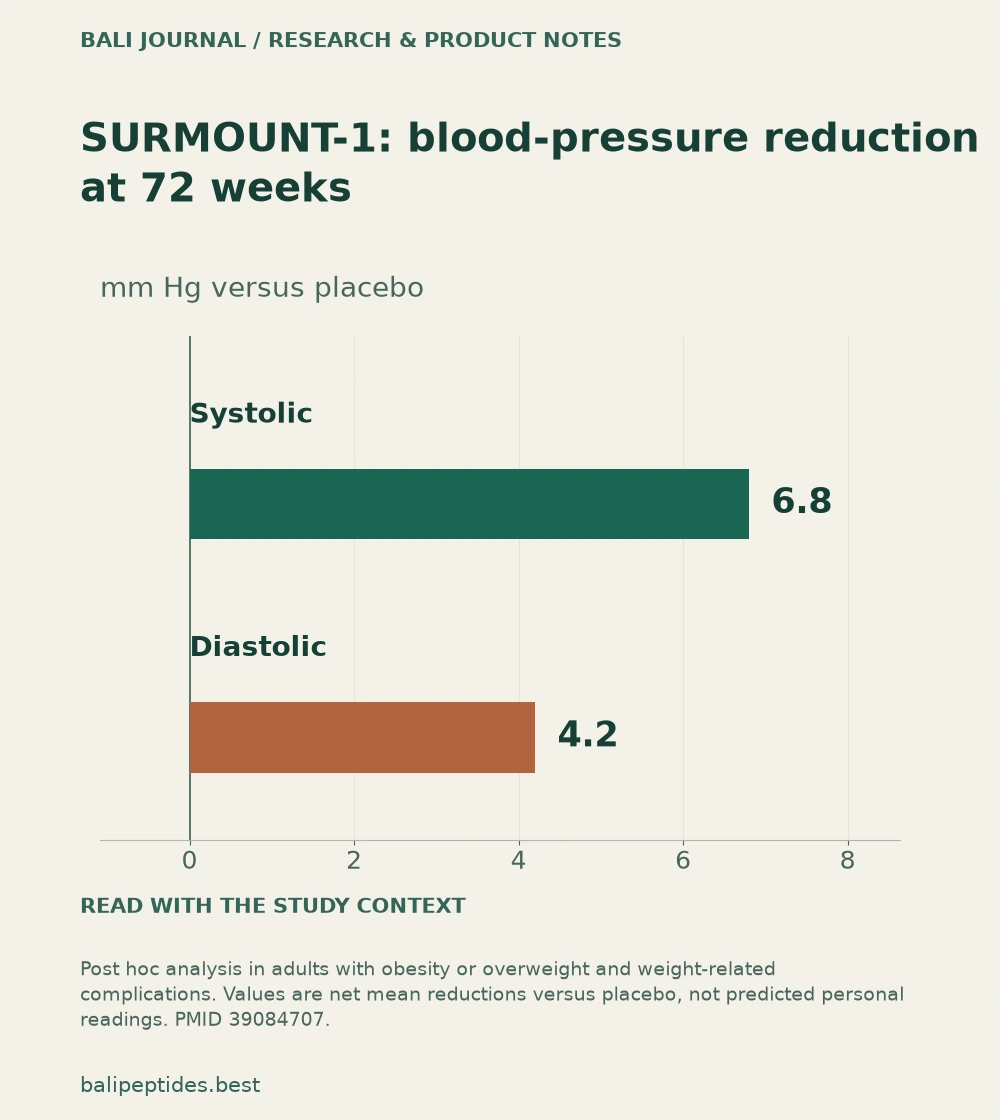
At week 72, the net reduction compared with placebo was 6.8 mm Hg systolic and 4.2 mm Hg diastolic. Normal blood pressure was recorded in 58.0% of participants assigned to tirzepatide and 35.2% assigned to placebo. These are defined trial findings, not a promise that an individual pen will produce a particular reading.
The distinction between systolic and diastolic pressure is useful. They describe different parts of the blood-pressure cycle, so retaining both numbers gives a more complete result than quoting whichever change looks largest.
Why the weight-loss connection matters
The researchers used mediation analysis to estimate how weight change contributed to the pressure changes. Their analysis attributed a substantial part of the reduction to weight loss. That is a meaningful link: the study investigated how a body-weight intervention connected with another measurable aspect of metabolic health.
It does not turn tirzepatide into a replacement for every blood-pressure treatment. Instead, it broadens the research discussion beyond one outcome. A clinician can consider the complete pattern of weight, blood pressure, existing medicines and other clinical information when reviewing a person's plan.
For readers, this is an example of why a compound's benefits are better understood as measured outcomes in context. A clear study result is more useful than a general claim that a product improves “everything metabolic.”
Office readings and 24-hour measurements
Blood pressure can be assessed in different settings. A clinic measurement captures a particular moment. Ambulatory monitoring adds readings across daily activity and sleep, helping researchers examine a longer pattern.
A SURMOUNT-1 ambulatory-monitoring substudy specifically examined 24-hour blood pressure. Its existence is important to the evidence map: researchers did not rely only on a single type of measurement when exploring this part of tirzepatide's profile.
| Measurement question | What it adds to the discussion |
|---|---|
| What happened to systolic pressure? | A defined outcome for the upper pressure reading |
| What happened to diastolic pressure? | A complementary outcome for the lower reading |
| What pattern appears across 24 hours? | A broader view than one isolated measurement |
| How much change is associated with weight loss? | A way to investigate the relationship between outcomes |
These questions can help you understand a research article or prepare a more focused discussion with your clinician. They do not require you to infer a treatment change from one reading.
Reading benefits and tolerability together
The analysis described blood-pressure-related adverse events as relatively infrequent, while low-pressure events occurred more often with tirzepatide than placebo. That is relevant information for anyone already using medicines that affect blood pressure.
Keep your current treatment details and any symptoms together when seeking medical advice. The value of the study is that it provides a measurable benefit signal and a documented tolerability context. An informed decision uses both.
For a Bali visitor, this is also a reason to plan around an existing clinical relationship rather than treat travel as a separate health history. The product you are considering should fit into a properly reviewed plan, with its identity and presentation clearly recorded.
Comparing the Bali pen offer
The tirzepatide product listing presents the available pen formats and catalogue prices. The 30 mg and 60 mg figures describe total labelled contents, which makes them useful for comparing the complete packs.
The pre-filled presentation is a practical feature of the offer. It gives you a defined product reference to use when contacting the team, rather than an undefined request for a metabolic or weight-loss product. Review the exact supplied presentation and its product information when comparing another offer.
For a delivery enquiry in Seminyak, Canggu, Umalas or another Bali area, include your chosen presentation, quantity, accommodation name and a map pin where useful. The team can then confirm availability and receiving arrangements for the actual address.
Tirzepatide's blood-pressure findings add substance to its wider metabolic research profile. The most useful next step is to keep that evidence precise, discuss its relevance with your clinician and compare the named pen format when organising a Bali product enquiry.
